John 20:19–23, Pentecost Sunday
Have you been watching the news lately? If you have, doesn’t it feel like the Holy Spirit has left the country, especially if you look at the recent shouting matches, unexpected leadership shifts, the cringey crying games and overall chaos unfolding in our Philippine Senate. Everyone seems to be talking at the exact same time, but nobody is truly listening. It is loud, chaotic, and to state the obvious, exhausting. Nakakapagod.
But if we are honest with ourselves, this kind of institutional noise isn’t just happening in government buildings. Sometimes, it happens in our own workplaces and right at our own homes.
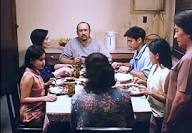
This brings to mind a classic Filipino movie, Tanging Yaman. To be completely honest, I initially did not like that film. It was just too chaotic for me. Everyone was constantly screaming, fighting over a piece of ancestral land, throwing old bitter memories in each other’s faces, and trying to out-yell one another. It felt a bit too close to the tiring realities of everyday life.
The deepest tragedy of the Rosales family in that movie is a paradox: they all lived under the same roof, shared the same blood, and spoke the exact same language—Tagalog. Yet, they were living in total isolation from one another because they were completely unable to communicate. They were talking to each other, but they were not speaking with each other. They speak the same language but they do not connect with one another.
Why? Because when human hearts become hardened by life, we stop speaking our nativetongue and we begin speaking entirely different, inaudible “emotional dialects.”
We see this clearly in the characters of the movie:
• Gloria Romero plays Lola Loleng, near death and fading from Alzheimer’s, she is trapped in a silent, desperate language of Longing. Her mind is slipping away, but her heart is frantically crying out because she simply misses her children and wants them gathered whole.
• Johnny Delgado is Danny, the eldest son who is trapped in the language of Insecurity and Regret. He carries the deep embarrassment of his material failures, so his dialect becomes defensive and angry because he desperately wants to berecognized as the one who stayed behind and cared for their ailing mother while his two other siblings left their home.
• Edu Manzano plays Art, the highly successful younger brother, who speaks the cold language of Exacting Rigidity. He screams and demands perfection because his hidden dialect is a desperate craving for attention and recognition. He treats love like a business transaction because he is terrified of being considered insignificant.
• And Dina Bonnevie is Grace, who left home for love, speaks the language of Defiance and Shame. Because her romantic choices left her financially broken, herdialect becomes combative and proud—she wears an arrogant mask to hide her desperate desire for acceptance and redemption. They are all speaking in Tagalog, and a smattering of English, but they sound like complete foreigners to one another.
Let us look at how this exact same thing happens in our own families today. We don’t need a movie script or a Senate hearing to see this; we live it, every single day. How?
• When we try to speak to ailing parents with deep resentment over how they treated us when we were young. A careless word or action becomes a festering wound that refuses to heal. Anything could be a reminder of an event that happened so long ago but seemed as fresh as yesterday. So, even a “hello” or “how are you” sounds like an accusation.
• When we try to speak to someone who is trapped in the language of insecurity and regret. These people are paralyzed by their past mistakes or their sense of material inadequacy. Because when people feel insufficient, every word we say sounds to them like a criticism, and they respond with defensive anger. Even casual observations sound like blame and an opportunity to reprimand and show their shortcomings.
• When we try to speak to someone who is trapped in the language of pride and control. On the surface, they seem rigid, demanding, and exacting. But underneath that hard exterior is a desperate, hidden craving for attention and recognition. They treat relationships like business transactions because they are terrified of being vulnerable. They are great providers and are always there when others need them. What we do not often see is that they too need reassurance that their efforts are appreciated and their gestures, even if not publicly rewarded, are recognized and valued.
• When we try to speak to someone who is trapped in the language of defiance and shame. Perhaps they made selfish choices in the past, and now they desperately desire acceptance and redemption. But because they are afraid of being judged, they wear a mask of arrogance, pushing people away before anyone can reject them. But deep inside, these people want forgiveness and a second chance at proving their real worth. When a family reaches this point, a dinner table becomes a room full of complete strangers speaking foreign, strange tongues. We throw words at each other, but no one understands a single thing. A little inflection, a misplaced accent, a change of tone or roughness of how a statement is phrased, then it’s all chaos—a certified Babel within one’s own home.
But remember how the Rosales family reaches its breakthrough. It wasn’t because they finally settled the legalities of the land or who rightfully gets the bigger prize money. It happened when their human strength completely ran out, and the gentle, agonizing sacrifice of their sick matriarch broke through their defenses. In her frailty, she showed a strength that didn’t demand its own way. She spoke a language that required no translation: the language of tenderness, forgiveness, and unconditional understanding.
My brothers and sisters, this is exactly what the descent of the Holy Spirit does at Pentecost. In our First Reading, we find the disciples trapped in their own language of fear and regret. They had once abandoned Jesus, they had failed Him, and shame and fear had locked theirhearts as their doors from the inside. But the Holy Spirit breaks right through those locked walls.
“Suddenly there came from the sky noise like a strong driving wind, and it filled the entire house in which they were.” The Holy Spirit, which appears to them as “tongues of fire” and rests on each of them, moves them From Fear to Courage. The Spirit doesn’t lecture them on their past failures; He speaks tenderly to the innermost part of who they are, giving them the lakas ng loob to step back out into the world. The Spirit encourages us to begin again despite our many failures and infidelities. And the same Spirit allows us to seek the wounded among us; the ones enslaved by sin and fear, and tell them they are not beyond hope.
In the Second Reading, St. Paul reminds us that though we have different gifts, we are all one body. The Holy Spirit cures our spiritual arrogan ce, moving us From Pride to Humility. He reminds the “successful” and rigid among us that we are emotionally poor without love, while He assures the “struggling” among us that we are deeply valued. In a family touched byPentecost, walang lamangan—there is no scorekeeping, because the Spirit teaches us that we belong to one another. We give to the neediest not because it is our obligation but our giftedness compels us to share our blessings with the less fortunate among us. And those that need our help are grateful and not demanding because they feel entitled to our material wealth. We are one body and we have a saying in Filipino: Ang sakit ng kalingkingan, dama ng buong katawan. The pain of the smallest part of the body is felt by the whole.
In the Psalm, we see the ultimate miracle. People from every nation, recognizing God’s wonderful works, proclaim God’s goodness. We pray “Lord, send out your Spirit, and renew the face of the earth.” It is a bold declaration. Hearts touched by God’s magnanimity sayingthe whole earth is renewed. In the same manner, a household that recognizes God’s primacy, despite the years of neglect, abandonment, hurts and unspoken grief, becomes new, moreloving, more forgiving. The Holy Spirit moves us From Hurts to Healing and Wholeness by becoming the ultimate Translator in our homes. Suddenly, every little act of kindness is magnified. Every little gesture of love is a testament of devotion.
And in the Gospel, Christ Himself offers us peace that no human institutions or instrumentalities could give. It is the peace that is attained by those who learn to forgive members of the family that have wronged them. It is peace achieved by those who ask for forgiveness even if they are not the ones who caused the hurt in the first place. When the Holy Spirit touches a home, He gives us “God’s ears.” Remember the beautiful question the granddaughter Chona asks in the movie: “Lola, hindi po ba Siya nalilito kapagsabay-sabay tayo nagdarasal at iba‘t iba ang hinihiling natin? Lahat po ba tayo naririnig Niya?” And Lola Loleng answers, “Oo naman. Hindi Siya katulad natin. Kahit yung hindi natin sinasabi…at yung lihim na dinadaing ng puso natin. Naririnig Niya.”
God doesn’t just listen to our words; He listens to the heart. And that is what Pentecost enables us to do. What once was an unbridgeable gap between family members can now become an opportunity to connect in a deeply personal way.
When you go home today and sit at your dining table, turn off the noise of the world. Stop letting your home feel like a chaotic Senate floor. If a family member acts out, don’t answer their harsh words. Ask the Holy Spirit to translate for you. Look past the anger to see theinsecurity; look past the rigidity to see the cry for recognition; look past the defiance to see the hunger for acceptance. Let the fire of the Holy Spirit melt our hardened hearts today, so that we can finally stop talking at one another, and begin speaking with one another.
Happy Feast of the Pentecost.

