John 6:51-58, Solemnity of the Most Holy Body and Blood of Christ (Corpus Christi)
Brothers and sisters, there is a man in Los Angeles named Mohamed Bzeek. He is a Libyan-born American, a Muslim, and a widower. But most importantly, he is a foster father to children no one else will take.
Since 1989, Mohamed has opened his front door exclusively to terminally ill children—those born with catastrophic brain defects, degenerative diseases, and conditions medicine cannot reverse. These are children the foster care system struggles to place because most families simply cannot bear the intense emotional and physical cost.
When the Department of Child Services calls him, they already know his answer. As Mohamed himself says: “The only house that accepts orphans and children who are about to die in Los Angeles is my house. I have dealt with 80 children since 1989. Ten children lost their lives in my arms.”
Mohamed’s life is defined by four profound actions:
- He brings these children into his home.
- He names them, because many arrive straight from the hospital labeled only as “Baby Boy” or “Baby Girl.”
- He feeds and cares for them daily.
- He embraces them, holding them tenderly and staying with them until the very end.
The Four Hungers of Modern Families
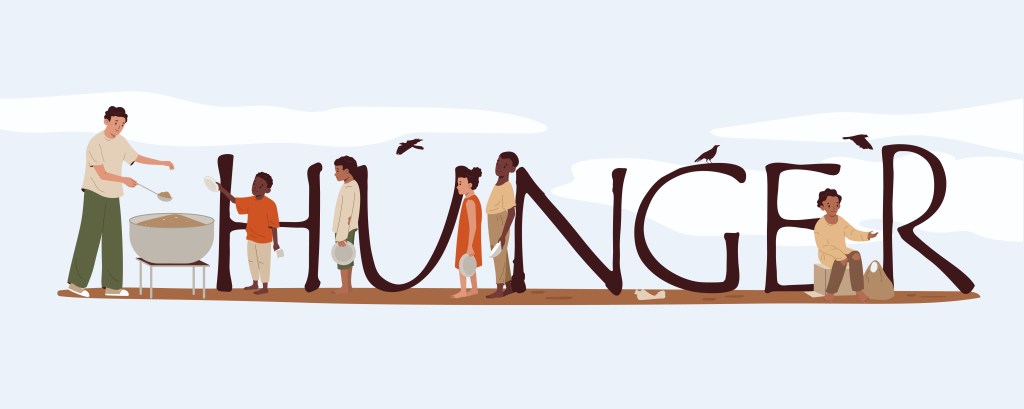
Today, on this Solemnity of the Body and Blood of Christ, the Church invites us to look honestly at our own homes. Our families are starving. We aren’t starving for physical food, but for something far deeper. Modern families face four universal hungers:
- The hunger to belong: We live in an age of fragmentation. Driven by busy schedules and the gravitational pull of private digital worlds, we are losing our common table. Without it, families stop being families; we become a collection of roommates sharing an address.
- The hunger to be truly known: We have unprecedented connection via smartphones and social media, yet we feel entirely invisible to one another. Children crave attention, parents age into quiet irrelevance, and everyone is present but no one is truly there. We hunger to be known and loved without condition.
- The hunger to be nourished: We live in households where emotional and spiritual starvation is quiet but real. Family members feel abandoned in their struggles, abused by life’s circumstances, or utterly unloved.
- The hunger to be held in our brokenness: Our families carry deep wounds—marriages fractured by betrayal, words spoken in anger, and households where grief or addiction sits at the table every day. We hunger for a presence that can sit with us in our pain without flinching.
How Mohamed’s Story Models the Eucharistic Gifts
The beautiful, radical truth of today’s feast is that Mohamed Bzeek’s four actions are the exact reflection of what the Body and Blood of Christ does for us at every Mass.
1. He Brings Us Home
Just as Mohamed opens his door to children rejected by the system, Jesus opens the doors of the Church to those who are exiled—either by their own sins or by the judgment of others. He welcomes the family members who feel unaccepted, the ones who don’t fit in, and the ones who feel spiritually homeless. The Eucharist is our home. As St. Paul reminds us in the second reading:
“Because the loaf of bread is one, we who are many are one body, for we all partake of the one loaf.” Christ brings the scattered and makes us one family at His table.
2. He Names Us
Mohamed refuses to let children die as anonymous statistics; he gives them a name. Christ does the exact same for those suffering unseen in our families—the teenager secretly self-harming, the depressed spouse, the family member trapped in addiction. The world might label them a “case” or a “problem,” but Christ looks at them and names them: Beloved. Child. Mine. He speaks directly into our hidden wounds and says: I know your struggles. I call you by your true name.
Our Psalm talks about the power of naming and consequent action of claiming: “For he has strengthened the bars of your gates; he has blessed your children within you.” In the Eucharist, when Christ names us disciples and friends, He protects us just as a king would protect his citizens against a foreign enemy. He blesses those who belong to His family.
3. He Feeds and Cares for Us
In the first reading, Moses reminds the people that when they were starving in the wilderness, God “fed you with manna… in order to show you that not by bread alone does one live.” For those in our homes who feel unloved, abandoned, or abused, human comfort is not enough. They need a deeper nourishment. Jesus fulfills this hunger by giving us His very self. He says in today’s Gospel:
“My flesh is true food and my blood is true drink. Whoever eats my flesh and drinks my blood remains in me and I in him.” The Eucharist is not a reward for the perfect; it is the life-giving medicine and care meant specifically for the broken. It is food for those who hunger and thirst for something that this world pretends to give but cannot truly give.
4. He Embraces Us
Finally, Mohamed embraces children who are sick and dying, holding them so they never have to face the darkness alone. This is the ultimate logic of the Eucharist. When we receive the Body and Blood of Christ, we do not receive an escape from suffering. We receive an embrace from the One who has already passed through the worst of human suffering and come out victorious on the other side. Christ embraces our sick, our grieving, and our dying, sanctifying our pain and making it the path to redemption. Those who fear for their families and loved ones, those who fear for themselves that anytime soon they might leave this world alone, God embraces them and whispers to their ears: I AM HERE.
Our Invitation: Become a “Bzeek” to Your Family
Brothers and sisters, Mohamed Bzeek once said of his daunting mission: “I do my best as a human being, and leave the rest to God.” That is the ultimate definition of a Eucharistic life.
Today, Jesus invites you and me to go out into our own homes and do these same four actions. He invites us to be the Body and Blood of Christ for one another:
- Bring them home: Make your family table a place of belonging again. Put down the screens, end the exiles, and invite each other back to genuine presence. Ask those who have not been home for a very long time, without judgment or reprimand, without any condition to come home.
- Name them: Truly look at the person sitting next to you—the quiet teenager, the stressed spouse, the aging parent. Stop treating them as fixtures of the house and notice their hearts. See their worth. Name their struggles and tell them they are loved.
- Feed and care for them: Offer love to the family member who is hardest to love, who feels abandoned or unloved. Feed them with patience, kindness, and forgiveness. And stop wishing them to fix themselves and be like you. In time, they would, God will guide them.
- Embrace them: Do not run away from your family’s grief, sickness, or brokenness. Endure the discomfort of seeing them and you cannot offer anything except your presence and prayer. Sit with those who are hurting. Hold them through the dark times, just as Christ holds you.
As you come forward today to receive the Holy Eucharist, bring your family’s hungers with you. Bring the wound that hasn’t healed and the loneliness you carry every single day. Put it all on this altar. Do your small, imperfect best, and trust that the God who fills us with the best of wheat will never waste a single crumb of what we offer Him.
“I am the living bread that came down from heaven;” He says, “whoever eats this bread will live forever.”


Thank you Ninang Deb
Sent from Yahoo Mail for iPhone
LikeLike