Matthew 25:35-46, Solemnity of Christ the King
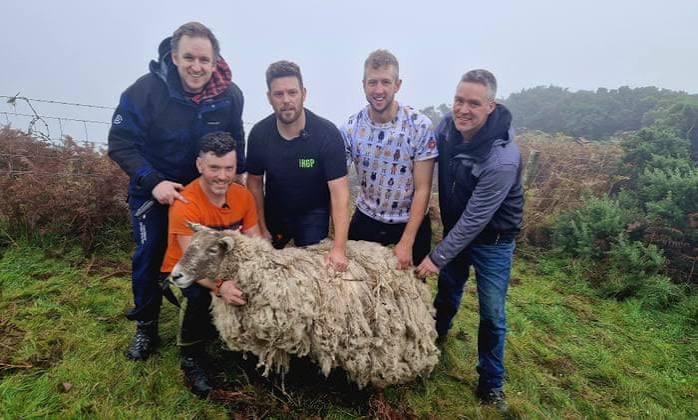
You might have heard about Fiona, known as the Loneliest Sheep in Britain. She was discovered at the bottom of a steep cliff along the Scottish coast, where she had apparently been living alone for more than two years. She could not find her way back up. Eventually, five farmers organized a rescue operation and managed to haul her up the hillside. She was badly overgrown with wool, but surprisingly, she was in reasonably good physical condition. She was shorn, given a new home and eventually became a mother to twin lambs.
There are other sheep rescued in different parts of the world who were not as fortunate. Some were found carrying enormous amounts of wool, barely able to walk. Others were underweight, their eyes covered by matted fleece, suffering from skin infections and parasites. Some were so weak that rescuers feared they would not survive another night. After being shorn, treated and given proper care, many recovered. They could walk again, see again, eat properly and live among other sheep.
I find these stories particularly interesting in the light of today’s First Reading from Ezekiel.
God says:
“The lost I will seek out, the strayed I will bring back, the injured I will bind up, the sick I will heal.”
Notice how personal and specific this promise is. God does not simply say, “I will take care of my flock.” He identifies the different conditions of individual sheep. Some are lost. Some have strayed. Some are injured. Some are sick.
And God promises to attend to each of them.
I wonder how many of us can recognize ourselves in these different sheep.
There are people who are lost. They have wandered far from God, from their families, from the people who once loved them. Some have made mistakes and are ashamed to come home. They think they have done too much damage, disappointed too many people, or committed sins that cannot be forgiven. They stay away, sometimes waiting for somebody to look for them.
There are sheep who have strayed. They have fallen in with the wrong crowd. They have fraternized with the wrong goats, so to speak. They have adopted habits, values and ways of living that have gradually taken them away from everything they once believed in. Sometimes they know they are going in the wrong direction, but they no longer know how to turn around.
There are injured sheep. Some carry wounds that nobody sees. They have been abused, betrayed, humiliated or abandoned. Some have spent years nursing deep hurts. They may look perfectly fine on the outside, but inside they are still hurting. They have learned to protect themselves by keeping everyone at a distance.
And there are sick sheep. Some need professional help, medical attention or psychological care, but refuse to seek it. Some are in denial. Others are afraid of being judged. Still others have lived with their pain for so long that they have begun to think it is normal.
These are not necessarily people somewhere out there. They may be living in our own homes. They may be our parents, siblings, children, relatives, friends or colleagues. They may be sitting beside us in church.
And sometimes, we refuse to take them in. Because they are dirty. Because they stink.
We find them difficult. We get tired of their behavior. We become impatient with their failures. We have heard their stories too many times. We have tried helping them before, and we have given up. Some of us would rather keep our distance because their problems are inconvenient and their wounds are difficult to deal with.
But today’s First Reading tells us something about the heart of God. God does not give up on the lost, the strayed, the injured and the sick.
And this brings us to the Gospel.
On this Solemnity of Christ the King, Jesus describes the final judgment. The King separates the sheep from the goats. But notice the criteria by which he judges them. He does not ask how impressive their religious credentials were, how many prayers they knew, or how often they occupied the front pews.
He asks whether they fed the hungry, gave drink to the thirsty, welcomed the stranger, clothed the naked, cared for the sick and visited those in prison.
Then he makes that extraordinary identification:
“Whatever you did for one of the least brothers of mine, you did for me.”
The people who were welcomed, fed, visited and cared for were not merely people in need. They were Christ himself, hidden in the lives of the least.
This is important because we sometimes imagine that following Christ means looking for him in extraordinary religious experiences. But Jesus tells us that we will encounter him in very ordinary human situations, especially in people who need our care.
And perhaps this is where we need to examine ourselves.
We are quite willing to welcome the good sheep: the well-behaved, the successful, the grateful, the people who make us proud. But what about the difficult ones? What about the sheep that have wandered away? The ones who have made terrible decisions? The ones whose lives have become complicated? The ones who have hurt us? The ones who need help but refuse to ask for it?
Do we still have room for them?
The Second Reading gives us another perspective. St. Paul speaks of Christ’s ultimate victory over every power and authority, including death itself. And then he says that Christ will hand over the Kingdom to God the Father, “so that God may be all in all.”
I find this a beautiful way of understanding the kingship of Jesus.
Christ is not building a kingdom of subjects who simply obey his commands. He is gathering and restoring a kingdom of people who have been brought back to life. His victory is not complete until the last enemy, death, has been destroyed. His Kingdom is moving toward the restoration of all things in God.
It is a kingdom in which the lost are found, the injured are healed, the sick are restored and those who have wandered are brought home.
And we are invited to participate in that work.
Perhaps the question we should bring home from today’s celebration is not simply, “Am I a good sheep?” It is also, “What have I done for the sheep around me who are lost, strayed, injured or sick?”
Who in my family needs somebody to look for them?
Who has been away for so long that we have stopped expecting them to come home?
Who is carrying an injury that I have never bothered to understand?
Who needs healing, but is too afraid or too proud to seek help?
Who has made a mess of their life and now needs somebody to help them begin again?
And perhaps there is one more question:
Who among them have I already decided is no longer worth the trouble?
We cannot save everyone. We cannot force people to change. We cannot always repair what has been broken. Sometimes the most we can do is remain available, keep the door open, accompany someone toward help and refuse to treat them as a lost cause.
But we can begin there.
Fiona needed five farmers to bring her up that hillside. The other rescued sheep needed people willing to get their hands dirty, remove the fleece that was weighing them down, treat their wounds and give them a place to recover.
The people around us may need something similar: somebody willing to listen, to forgive, to accompany, to seek professional help when necessary, and to make room for them again.
Today we celebrate Christ our King. May we learn to recognize his face in the sheep who are lost, strayed, injured and sick. And may we never forget that the Kingdom he will hand over to the Father is a Kingdom in which nobody is considered disposable.
Amen.
*Image from The Guardian

