John 10:1-10; Fourth Sunday of Easter
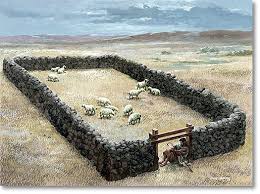
Let me begin my homily by asking a pointed question: “What news is certain to unsettle us and make us forget, albeit momentarily, who we are in our relationship with God, the Good Shepherd?”
The oil crisis? Maybe. The controversy surrounding our politicians? Could be. The latest chismis of the neighborhood Marites? Sometimes.
For many of us, nothing is more “cutting” to the heart than the sudden and unexpected news of a loved one’s terminal illness or death. Cancer. Even if we call it euphemistically the “Big C.” Or the unexpected and sudden passing of a loved one.
In an instant, that news steals our joy, slaughters our hope, and destroys our faith. It is the ultimate intrusion: a violent entering and breaking in into the comfort of the sheepfold, our home, our peace.
The Intrusion: The Thief at the Wall
In today’s Gospel, Jesus warns us that the thief does not enter through the gate; he “climbs over elsewhere.” He is not a welcome guest. He is not even invited yet he comes when we least expect him. And because we are not prepared, we easily fall into his machinations.
Great anxieties—like a grave medical diagnosis or the silence of a funeral home—do exactly that. They don’t ask for permission. They force their way in. They bypass our reasoning, climb over the walls of our security and hijack our emotions.
When we are “cut to the heart” (the way the disciples felt) by this kind of sorrow, we are not just hurt; we are pierced. Parang tinutusok ‘yong ating puso. Mahapdi. Makirot. Ang sakit sakit!
In the original Greek, this is katenygēsan (κατενύγησαν)—a sharp, agonizing stab. In that moment of vulnerability, the “thief” (in the form of confusion, despair or bitterness) enters. He comes to do what he knows best: to steal, slaughter, and destroy. He tries to convince us that the “dark valley” of the Psalm is the only reality there is: a path of interminable darkness, loneliness and grief. There is not even a glimmer of light in sight.
The Distraction: The False Names
When we are unsettled by this vehement intrusion, we are easily distracted. We panic. We wander out of the safety of the sheepfold, thinking that the “relief” being offered to us by the world is the same as the one offered by the Shepherd. Some fall into depression. Others get tempted by alcohol or anything that deadens the lingering pain, that makes us forget for awhile the suffering that breaks our heart into a million pieces.
And this thief is not only a master illusions but of “false names.” In the haze of our anxiety, he whispers names that we begin to believe are ours: Ulila, Balo, Namatayan ng Anak. They easily translate to: The Unloved. The Abandoned. The Unworthy. The Unimportant. The Unholy. The Ugly One. Like Mary Magdalene at the tomb, our eyes become so heavy with tears that we see the Lord but mistake Him for a stranger. He is just a gardener now when He was the Beloved of old. We forget who He was and therefore, forget too, our identity, our relationship with Him. We forget that we belong to a Shepherd who “calls his own sheep by name.”
We are not just one of the sufferings. We are never mere statistics to God. He enters the very chaos of our lives, goes down to the most hellish of places we find ourselves to be and stays with us until we recognize Him.
When Mary Magdalene heard her own name from Jesus, she instantly recognized her Lord. And her sorrowing was replaced by unmistakable joy. This joy is not r eserved to her and the disciples alone. We, too, can lay claim to this as the Psalm reminds us: “he refreshes my soul,” “he guidesme in right paths,” “he anoints my head with oil; my cup overflows.”
But the thief, that stranger who comes over the bakod to trick us into leaving the sheepfold will not relinquish his hold on us especially when we are down and out. It is when we are weak and vulnerable that he chooses to strike. He would relentlessly harass us. And he does so with merciless determination.
The Encounter: The Sweet Names of the Shepherd
However, Peter reminds us in the First Reading that even a “corrupt generation” or a season of “crooked” paths cannot drown out the True Voice. We are called to “save ourselves”—or rather, to allow ourselves to be saved—from the “slaughter” of despair.
The Good Shepherd stands at the Gate and calls us back. He does not use the cold, clinical labels of the world. He calls us by the sweet names that only we know and respond to: “Anak, Mahal, Sinta, Kaibigan.” Just as Jesus called “Mary” tenderly and with much love, he speaks your name into your specific anxiety. This is the “voice” the sheep recognize. It is a voice that doesn’t ignore the “wounds” but reminds us, as the Second Reading says, that “by his wounds you have been healed.” He is the Shepherd who took the slaughter upon himself so that the thief could no longer claim us.
When we are tempted to think na “Kawawa tayo. Iniwan na tayo. Hindi na tayo buo,” the Good Shepherd shows us His wounds saying: “I did this all for you. Believe in me. I have come that you might have life and have it abundantly.” He is essentially telling us: “Though you see signs of death, despair and destruction all around and inside you, you yourself will never be destroyed for you are mine. And nothing that the Father gives me is ever lost.”
Peter further reminds us that we “were straying but have now returned to the Shepherd and the Guardian” of our souls. And possessing our souls, He will not let anyone steal any of us away from the Father.
In Him we are called “The Loved. The Beloved. The Cherished. The Child of God.”
The Result: A Return to Sanity and Mission
The result of hearing that voice is an instant return to sanity. To be “sane” in the Kingdom of God is to remember who you are in relation to Him. Like Mary Magdalene, the restoration of the name leads to a restoration of the relationship. And remembering the relationship rekindles our mission.
The “abundant life” promised in the final verse of the Gospel is not a life without the “dark valley,” but a life where the valley no longer has the power to destroy us. Our hope is restored, and our faith is tasking us for this mission. We are no longer the “Abandoned”; we are the “Sent.”
We leave the fold not to wander astray, but to walk in “right paths” for His name’s sake, carrying the message that even in the face of death, there is a table spread, a head anointed with oil, and a cup that overflows with goodness and kindness all the days of our lives.
As we celebrate Good Shepherd Sunday, we are asked to reflect on the following questions:
1) What recent or past events “pierce” or “stab” your heart that unsettle you?
2) What is currently “stealing” your peace or “slaughtering” your hope?
3) How is the Good Shepherd inviting you to return to the sheepfold with Him?


Sent from my iPad
LikeLike