Luke 24:13-25, Third Sunday of Easter
Do you know what I noticed about my good friends who are either married couples or best friends? Many times, when we get together and chat, one suddenly tells the other, “Pssst, kwento mo kay Father ‘yung nangyari sa ‘yo kahapon,” or “Kwento mo kung sinong nakita natin sa Cebu,” or “Kwento mo ’yung nangyari sa akin sa ospital,” etc. I’m always eager to hear the story. But it fascinates me that my friends are also eager to hear the same story told again, doesn’t matter if it’s a happy or sad story. Seems like it’s really a mark of closeness when we don’t mind hearing our best friend or spouse tell our story over. At ‘yung nakakatawa minsan, when the teller has to be corrected on too many details, sasabihin ‘nung isa: “Ako na nga magkukwento!” And still, the other person is only too willing to listen to the same story again, as though we were all hearing it for the very first time.
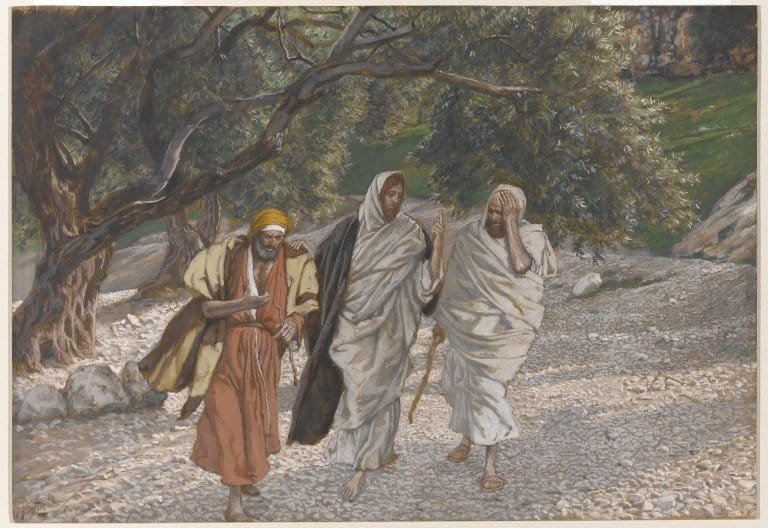
You know, sisters and brothers, the Risen Jesus in the Emmaus story has always struck me as pilyo. He caught up with his unsuspecting friends. They’d just been dealt their biggest letdown. So, I suppose they were walking back to everything and everyone they’d left behind to follow someone they thought was their bright star, but turned out to be a black hole; sucked out all their joy. They were conversing and debating about all that had occurred, the Gospel said. They were debriefing their bitter disappointment. They must’ve felt that Jesus had strung them along all this time, only to die and leave them holding nothing but ashes from a fire they burned bridges for, just to follow him. Si Hesus paasa lang pala.
So, pilyo Jesus pretended to not know what his friends were talking about. He triggered them to tell the story again. “Jesus of Nazareth was a prophet mighty in word and deed before God and the people,” they began. Then, it became sadder, “Our chief priests and rulers handed him over to be crucified to death.” Then, saddest of all, “We were hoping he would be the one to redeem Israel.” To be fair, they mentioned that the women and the other disciples found Jesus’ tomb empty. But then, why were these two guys still walking back to Emmaus despite the latest news of the empty tomb? Maybe they didn’t want to have anything to do with the whole thing anymore. Tama na. Nasunog na sila. End of story.
Then, what did Jesus do? He retold their story, this time, “beginning with Moses and the prophets.” Same old details but an astonishingly new interpretation. He lit up its dark corners. He tied up its loose ends. And to bring the story home, Jesus sat with his friends long enough to do exactly what he did just a few nights ago. He broke the bread in the same familiar way…then, vanished from their sight (probably smiling as he did so). The spark of recognition reignited his friends, whereupon their hearts started burning again!
Sisters and brothers, I’m sure many of us have happy stories that have slowly turned into tales of woe and disappointment, and we no longer feel like saying, “Pssst, ikwento mo kung anong nangyari sa atin.” The fire is either very tiny, or even out. Maybe, we need an Emmaus grace. Emmaus grace is simple but profound. In our prayer, we can ask Jesus to tell our story back to us. And when he does, he might just tell it quite differently; this time in the melody of joy and gratitude. As he retells our story, he might just light up what we’ve left behind in dark corners. He might just weave together the ends we’ve given up on and left loose. Did you ever notice, sisters and brothers? When we are joyful and grateful, we tell the same stories quite differently ourselves. This is familiar to us. A mother, for example, who went through excruciating pain giving birth, tells her story differently when her baby is finally sleeping in her arms. A soldier shot in a senseless war, tells his story differently as he survives and is sent home to be with his family again. OFWs who have endured painful years of homesickness abroad, tell their stories differently once their children walk up the stage to receive a diploma that they all bled, sweated, & teared for. When we are joyful and grateful, our stories are not erased. They are lit with a new flame. And we love to tell and hear the story anew, over and over again.
If we have a story we loved telling before, but would rather not tell again, we can still be sure that the Emmaus “stranger” has not stopped walking with us, sisters and brothers. He knows every detail, every heartbreak, every burned bridge in our story. If we allow him, he might just tell our story back to us in his own sweet, pilyo way, one more time. Surely, he will bring our story home to joy and gratitude, and hopefully, he leaves our hearts burning, too, just like the Paschal Candle at Easter Vigil sharing its flame with us one candle at a time. Until the whole church glows with all our small, flickering candles. There is still darkness, yes. But we know the story of Christ our Light will be told and sung again real soon.
Cleopas and his friend bolted back to Jerusalem. Reaching their friends, I imagine Cleopas, breathless from the run, telling his friend: “Psst, kwento mo sa kanila anong nagyari sa atin, dali!” Since then, to this day, people have not stopped retelling the story. And thousands still love it told and heard over and over again. The Lord would love to tell us back our story, sisters and brothers. And when we allow him to do so, we just might realize that in the most precious moments in our lives, the story teller himself is our story.
*”The Pilgrims of Emmaus” by James Tissot (Brooklyn Museum)


Thank you Ninang Deb. Mercy
Sent from Yahoo Mail for iPad
LikeLike