Matthew 28:1-10, Easter Sunday
I have always wondered how we would be if Jesus had not risen from the dead.
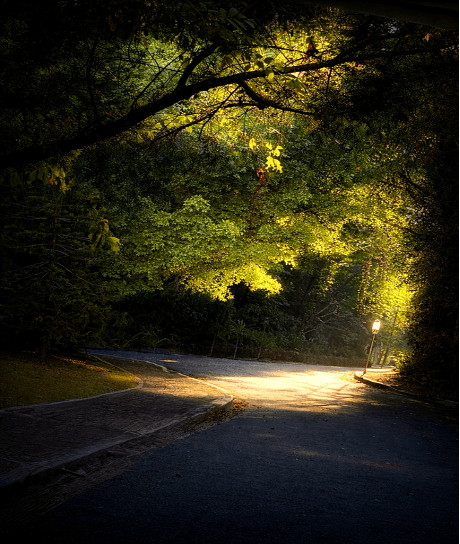
I imagine that the disciples of our Lord would have gone back to their old way of life. All the excitement would have faded after a few days. They would have continued waiting for the coming of the Messiah—and perhaps died waiting. Wiser now, they would not follow anyone, especially not a prophet, anytime soon. For them, the sun would no longer seem to rise. They would continue living in darkness.
And for us, our daily grind would remain just that—more of the same. Everything would go on—day after day, sunrise after sunrise—but nothing would change. We would still be in darkness.
But the Lord is risen—as He promised.
It was still dark when Mary of Magdala came to the tomb alone. What did she expect to find? Perhaps she simply wanted to keep vigil. Or perhaps, deep in her heart, she was hoping against hope that Jesus had indeed risen, as He had promised. After all, it was the third day. Still, she was not expecting to find an empty tomb. And when she did, she assumed that someone had taken the body of Jesus. So she ran to the disciples and told them. They all returned to the tomb and saw that it was indeed empty.
And this is where the Gospel becomes especially striking. In every Gospel, the stone is rolled back and is no longer an obstacle—but John tells us something more: God has already acted, even while we are still in the dark.
Deep in their hearts, the disciples must have hoped that Jesus had truly risen as He promised. With faith hanging on the edge of reason, they began to proclaim that the Lord is risen. This conviction drove them to go far and wide to announce the good news. Gradually, they began to see everything in a new light.
For us, the resurrection has recreated our world and filled it with hope. Our daily grind is no longer mere repetition, more of the same. Easter introduces a kind of creative repetition: the same world, but transformed; the same life, but with new meaning; the same sunrise, but now as resurrection light. Pain and death still exist, it is true. Yet they have been overcome by our Lord’s suffering, death, and resurrection. If there is one lesson we must learn from the resurrection, it is this: it is no longer death that defines us, but life—a new beginning.
Pardon the strange analogy, but it is like waking up in the same house you have lived in for years—the same walls, the same furniture, the same rooms. Nothing has changed. And yet, one morning, after a long and difficult night, you wake up—and the light is different. What once felt heavy now feels lighter. What once felt empty now feels alive. The house is the same—but you are not.
As Augustine of Hippo once said of God: “ever ancient, ever new.” The same world—ancient, familiar, unchanged—and yet, in the light of the resurrection, it becomes new. Not because the world has been replaced, but because it has been opened. Not because suffering has vanished, but because it no longer has the final word.
The stone has been rolled back. That is Easter. It is, in truth, a transformation from within—a new way of seeing, a new way of living, a new way of hoping. The world is the same—but because Christ is risen, we are no longer the same.
The challenge for us, children of Easter morning, is what to do with this renewed life. The disciples understood the Lord’s resurrection as a commission to proclaim the good news. They suffered for it. They gave their lives for it. And in doing so, they gave the good news a home in the hearts of believers throughout the world.
We are called to do the same—though in ways that respond to the realities of our time. We can begin by giving hope to those who feel that nothing will change, who are overwhelmed by the weight of life.
Many today endure the pain of losing loved ones without the chance to say goodbye. Some are not even able to grieve as they should. Think of overseas workers who receive the news from afar that a loved one has passed away. Too far to return in time. By the time they come home, the burial is over. They stand before a grave they never saw prepared, mourning a goodbye they were never able to give. Jesus had Joseph of Arimathea to offer Him a tomb. Today, many are denied even that dignity.
There is still so much opportunity, even now, to reach out to others. We are called to be bearers of hope—to lighten the burdens of others, to stand with those who grieve, to open spaces where others feel trapped. In our own small ways, we are called to do what God has already done for us: to help move the stones that weigh upon others.
This Easter, I find myself asking what it means to begin again—not in theory, but in the concrete realities of life. We all carry something: a burden, a loss, a question that does not easily go away. I have seen this in small, personal ways. There are moments when I wake from a dream in which I am walking freely with friends—only to realize, upon waking, that I still need my walker to move. And in that quiet return to reality, I am faced again with a choice. These are moments when hope does not come easily, but must be chosen. In quiet decisions to keep going, to keep trusting, to keep believing that something new can still unfold—even here. What Viktor Frankl called “tragic optimism” is not a denial of pain. It is the courage to find meaning within it. It is the strength to say that suffering will not have the final word.
And perhaps that is what Easter asks of us—not to escape life, but to live it differently. To allow even our wounds to become places where grace can enter, where love can deepen, where something new can begin. And yet, the resurrection meets us there—not by removing everything that weighs on us, but by giving us a way to live through it.
In one of his Lenten messages, Pope Francis reminds us that even in difficult and uncertain times, we celebrate Holy Week in a way that reveals the heart of the Gospel: God’s boundless love. In the silence of our lives, the Easter Gospel resounds. In the risen Jesus, life has conquered death. This Paschal faith nourishes our hope—a hope not only for a better time, but for a better way of living: freed from evil, renewed in love, and opened to new life.
As we continue our resurrection liturgy, let us pray this brief prayer litany. You will respond by praying: Roll back the stone.[1]
When we are all despairing,
when the world is full of grief,
when we see no way ahead
and hope has gone away:
Roll back the stone.
Although we fear change,
although we are not ready,
although we’d rather weep
and run away:
Roll back the stone.
Because we’re coming with the women,
because we hope where hope is vain,
because you call us from the grave
and show the way:
Roll back the stone.
Amen.
[1] written by Janet Morley. Posted on the Monthly Prayers page of the Christian Aid website. http://www.christianaid.org.uk/
 One Lost Sheep
A glorious Easter! Thank you.for sendind rhis beautiful homily. Mercy
Sent from Yahoo Mail for iPhone
LikeLike