Matthew 20:17-28; Wednesday in the second week of Lent
Let me begin this homily with something I have been teaching at the Ateneo college. And no, it is not theology or philosophy. Since the first semester, I have been teaching Global Politics. This semester, I am teaching International Political Economy.
Our classes examine how power operates in the world today. We analyze the expansion of alliances, track naval fleets patrolling contested waters, and discuss how smaller states are compelled to choose sides in rivalries they did not create. We explore how quickly tensions can escalate into open conflict. We reflect on this painfully, in the ongoing wars in the Middle East, where power appears in its most visible and violent form.
But power is not only about military strength. We also study how major powers weaponize trade by imposing sweeping tariffs that can cripple industries in smaller economies. We assess the impact of economic sanctions that freeze assets and cut countries off from global financial systems, measures designed to pressure governments yet often borne most heavily by ordinary citizens.
In political science, power is often described as the ability to make others act in ways they would not have chosen on their own. At times, this happens through persuasion, by offering benefits or incentives that win consent. But it can also operate through pressure, narrowing the options until compliance seems unavoidable. And sometimes, it works through fear, where obedience is secured not by attraction but by the threat of loss or harm.
This worldly understanding of power is not far from what we encounter in today’s Gospel. Jesus has just spoken about his coming suffering and death. The shadow of the cross is already before him.
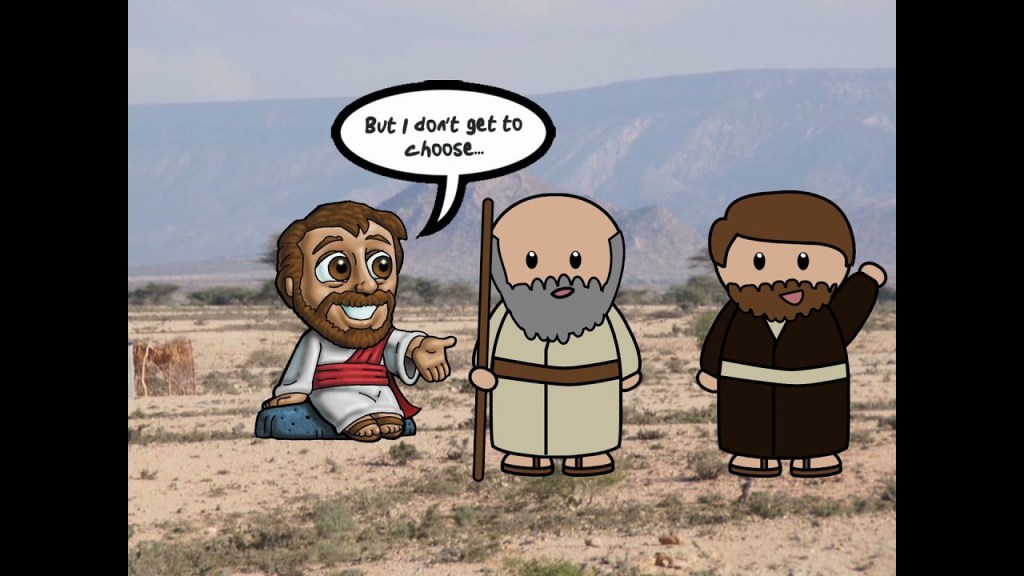
And yet, in that very moment, the mother of James and John steps forward with a request: that in his kingdom, her sons may sit at his right and at his left.
So while Jesus speaks of sacrifice, she speaks of status. While he prepares for suffering, she thinks of seating arrangements. She asks for closeness to authority, for rank, for visible prominence.
What moved her to make such a request? Perhaps it was love for her sons. Perhaps it was hope for security. But beneath it is a familiar logic: stay near the center of power, and you will share in its benefits. Remain close to authority, and you will not be forgotten.
Is that not the same instinct we often observe in politics, and perhaps even in ourselves? The desire to secure influence, to be recognized, to stand above rather than behind.
The reaction of the other ten disciples reveals even more. They become upset but not because they reject ambition but because they have the same desire. They also want recognition. They also measure greatness in worldly terms.
In that moment, the circle around Jesus looks very much like the world around us. Then Jesus overturns their expectations. Whoever desires greatness must become a servant. Whoever wants to be first must place others first. In that moment, he reshapes the very meaning of power.
In the world, power guards status. It secures advantage. It demands obedience. In the kingdom of God, power bends low. It raises others up. It gives itself away for their good.
What makes his words even more powerful is where he speaks them. He is on the road to Jerusalem, fully aware of what awaits him there. This is not an inspiring speech detached from reality. It is the path he is already walking. He does not simply speak about service; he embodies it. He does not merely teach about sacrifice; he is already consenting to it.
The lesson from both our classrooms and the Gospel today is this: the question is never whether we have power. We all do, in some measure. The real question is how we use it.
When authority is placed in our hands at work, in our community, in our family, in our relationships, how do we exercise it? Do we measure leadership by visibility, control, and prestige? Do we equate strength with always winning, always having the last word, always getting our way? Or do we dare to follow Christ’s example: serving quietly, forgiving generously, accepting responsibilities that bring no applause?
The world admires power that dominates. The kind that protects the self and builds our own small kingdoms. Christ reveals a power that redeems, that gives the self away and builds God’s Kingdom. The question is which kind will you exercise today.
*image from the Internet
 One Lost Sheep