Matthew 5:1-12a, Fourth Sunday in Ordinary Time
To be alive is to be fed at varying frequencies. Take breathing. We need to bring in fresh air every few seconds or so. We cannot skip breathing for longer than several minutes. After an hour or so, we need to drink water. After a quarter of a day, we need to eat. After two-thirds of a day, we need to sleep.
Imagine the complex supply chains that are needed to replenish what is depleted in our human bodies every second of every day. Even if we do nothing, just by exhaling, some kind of emptying is already happening. From these biological cycles of demand and supply, we come to realize that we are hardly self-sustaining.
Our lives are bookended by dependence. The first bookend is in the morning of our lives, as children who need to be fed by love. The second is at twilight, as senior citizens who need to be helped by others.
In between, for several decades, we come into our own. We spend our adult lives trying to make something of ourselves. We are fulfilled when we learn to walk on our own. We value autonomy. We do not want to be helpless; we want to be useful. We heap praise on the self-made.
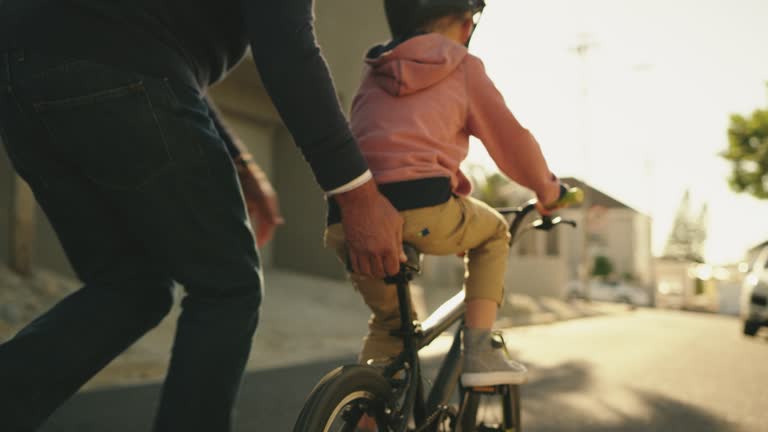
In truth, we are creatures of dependence all throughout our human journey, not just in the morning and twilight of our lives. This dependence in life is like riding a bicycle.
Life, like the bicycle, is a gift. We could not have given it to ourselves. We learn to ride this bicycle and we are able to go places with it. We could never have done so without someone holding on to us and running with us to guide us how to keep moving and how to keep from falling. We would never have learned if there was no letting go. We could never have gone places if we did not risk wobbling and falling every so often.
Truth is we are creatures unable to keep balance. We wobble trying to keep our fears and loneliness at bay. Before the sheer grandness of the universe, we are small. We think we are makers of our destiny but our time here on earth is nothing compared to eternity.
In truth, we are poor. And this kind of poverty is not a curse. There are those who still equate material wealth with God’s blessing. Today, in the first reading, the prophet Zephaniah disabuses us of the notion especially after the high and mighty are brought low in the painful and humbling experience of the Babylonian Exile.
When Paul writes to the proud people of Corinth, he is also impressing upon us how God chooses “the foolish of the world to shame the wise…the weak of this world to shame the strong.” God’s choice is for “those who count for nothing, to reduce to nothing those who are something, so that no human being might boast before God.”
Christ our Lord confirms this choice of God in our Gospel today. He begins the beatitudes by proclaiming how “blessed are the poor in spirit, for theirs is the kingdom of heaven.” The phrase “in spirit” is key as it refers to an inner disposition and drive that is more important to God than the outward appearance of things.
To be poor in spirit is to recognize our radical dependence on God for everything. To be poor in spirit is to admit the futility of possessions and power to satisfy us. On the other hand, those who are not poor in spirit are those who are full of themselves, those who are entitled and proud at heart who have no need of God.
We are here today in this little room that is God’s church to be fed at a frequency of once every seven days. We are here because we are looking for happiness, meaning, peace. We come together to seek solace, friendship, care, connection, and communion. We are here because we are looking for God.
We are here because we do not believe what the powerful of this world say about power, or what the rich swear about wealth, or what the celebrities crow about fame. We come here to confirm for each other the things that are perishable and those that last.
We are here because for all our possessions and accomplishments, we remain poor at heart. For all the heartbreak we see in our world today, we come here with empty hands to hunger for justice and mercy and peace. Our sacrifice is a poor and broken spirit. A broken and contrite heart, God will not spurn (Ps 51:17).
In our poverty of spirit, God blesses us. In humility, we can only be grateful for the blessings we have received. In truth, we can only be happy with the blessing we are and can be for one another.
*Getty images
 One Lost Sheep