Luke 23:35-43, Solemnity of Christ the King
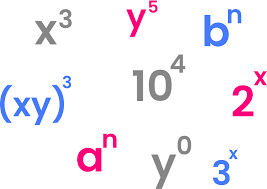
First we learned addition, then subtraction. After that, multiplication, then division. Then we learned exponents, the so-called powers. That little superscript to the right of a number we soon learned was a power. It had power to make any number big. And so two raised to the power of little four was not eight, but 16. That little four had the power to multiply what was under it fourfold.
On this Solemnity of Christ the King, it is good to take a look at power in our lives. What’s our superpower? Who are the ones under our spell? Who are our minions? Who will go with us? Who will not?
What are the powers we wield? What powers can raise us up or multiply the little that we are many times over?
Conversely, we can ask who has power over us? Who or what has us spellbound?
Let’s take a look at the power of money. Money can make us big, it can also unmake us. Its power can break a family apart. When we are under its spell, it creates a hole somewhere inside us that keeps getting bigger with more of it until we realize we are empty. It is never enough. Our corruption crisis is about the terrible power of money to break institutions and people.
Consider the power of political might. That kind of might is magnetic and it is intoxicating. We know this because why on earth would people and their family dynasties be falling over themselves to run for office? Partly money. Mostly power. If democracy is in crisis in many places, it is because we’ve given autocrats free rein to rule us in the guise of protecting order or peace or prosperity.
When Christ came proclaiming his Kingdom was at hand, we were enthralled. The Kingdom was inaugurated in a crescendo of power, with bread multiplying, demons fleeing, and storms subsiding. In him was power unlike anything ever.
It was not hard therefore to believe Paul when he tells the Colossians: “in him were created all things in heaven and on earth…. He is before all things, and in him all things hold together.”
Until all things fell apart and power went out on the cross. Or so it seemed.
Beholding Christ our King on the cross, we ask: how could our King be crowned with thorns? How could the throne of this King be a cross that was meant only for criminals? How could such a King be mocked and tortured and abandoned by his friends? Where did all the power go?
In truth, the power never really went anywhere. It was still all there in him.
We know this from the words and witness of Paul again to the Colossians and to us today: “in him all the fullness was pleased to dwell, and through him to reconcile all things for him, making peace by the blood of his cross….”
All the fullness of God was pleased to dwell in him. And so we continue to believe: there on the cross, power was indeed made complete. And its final fullness was made possible with two more powers that remained. One was wielded by a thief of all people, and the other by Christ our Lord. These are the power to repent and the power to forgive.
The power to repent is the power to overcome our pride, to own up, to not make excuses or pass the blame, the power to take responsibility and acknowledge our fault. The power to ask for forgiveness is the power to let go of our self-righteous self-justification and make reparation for the harm we have caused. The power to repent is the power of humble waiting and hope.
On the cross, the power to repent is given to us.
The power to forgive is the power to redeem, to make whole again. The power to offer mercy is the power to give peace and return life, the power to bring home the ones who have lost their way. The power to forgive is the power of patient waiting and love.
On the cross, the power to forgive is shared with us.
Through Christ our Lord and King, by the blood of his cross, we are raised to these powers. The power to repent and the power to forgive are the little superscripts that can multiply the little that we are many times over.
 One Lost Sheep