Luke 12:13-21, 18th Sunday in Ordinary Time
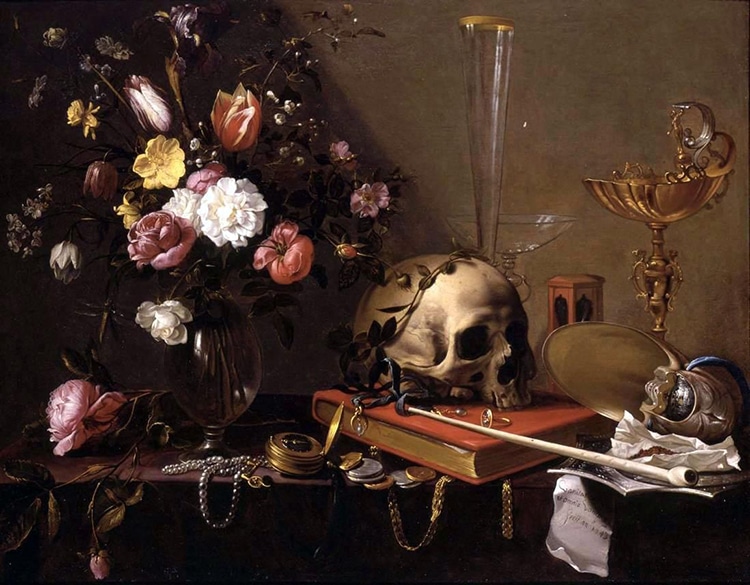
I’ve always been curious about the word “kaek-ekan.” You know—when someone says, “Puro ka na lang kaek-ekan!”
It’s a term we often use for things that feel pointless, shallow, over-the-top, or just plain unnecessary. It could be someone being too dramatic, or someone who’s trying too hard to impress. It’s the kind of life that’s all for show, no substance.
But I never really knew where the word came from.
Until one day, a friend of mine—a priest now, but a seminarian back then—told me that “kaek-ekan” was actually coined in one of their biblical theology classes. According to him, it’s a play on the word Ecclesiastes—abbreviated as Ecc-Ecc, which became ek-ek and eventually kaek-ekan.
And if you’ve read Ecclesiastes, you’ll know why that makes perfect sense. Because the central message of that book is this:
“Vanity of vanities! All is vanity!”
— Or in Filipino: “Walang kabuluhan, lahat ay walang kabuluhan.”
In other words: kaek-ekan lang ang lahat kung wala ang Diyos sa sentro.
The Gospel: Jesus Is Not Just Lashing Out—He’s Unmasking a Heart
Now let’s turn to the Gospel (Luke 12:13–21), where a man interrupts Jesus’ teaching to ask Him to intervene in a family inheritance dispute. At first glance, Jesus seems harsh: “Friend, who set me to be a judge or arbitrator over you?” But this isn’t just a random rebuke.
Let’s be honest. The man wasn’t just seeking justice. He was obsessed with his share. The fact that he interrupted a spiritual teaching session to bring up property shows where his heart really was. Jesus wasn’t condemning asking for fairness. What He condemned was greed masked as fairness.
The man may have believed he was being “reasonable,” just fighting for what’s due to him. But if he had truly been listening to Jesus, he would have known: happiness and peace don’t come from material things. They come from trust in God, gratitude, and generosity. In short: Ang problema ng taong ito ay hindi kayamanan, kundi ang kaek-ekan ng puso niya.
The Parable of the Rich Fool: An Autopsy of Kaek-ekan
Jesus then tells a story of a rich man who, after a bountiful harvest, thinks only of himself. “I will tear down my barns and build bigger ones!” he says. But that very night, God says, “You fool! This very night your life is being demanded of you.”
Here we see the ultimate form of kaek-ekan: self-centered accumulation. His sin isn’t wealth. It’s that he never thought of sharing it. Not once does he say:
- “I will give thanks.”
- “I will share with my workers.”
- “I will help the poor.”
Just: “I, me, my and mine.”
A soul talking only to itself—drowning in its own echo chamber of selfishness.
Lahat ng pinaghirapan niya—kaek-ekan lang pala.
Not because he was rich. Not because he was successful.
But because he stored up treasure for himself and was not rich toward God.
What Ecclesiastes and the Gospel Teach Us
This is where Ecclesiastes and the Gospel match perfectly.
In the first reading, the writer complains that after all his work,
“I must leave it to someone who has not labored for it.”
He sees the truth many of us refuse to face: No matter how hard we work,
no matter how much we save, no matter how many barns we build—
we can’t take it with us.
Kung sa huli, ang lahat ay iiwan mo rin, eh di ano pa ang silbi ng paghahangad na yan kung wala sa Diyos ang puso mo?
What Should We Do Then?
Abandon all riches? Not really! The Psalm gives us the first antidote:
“Teach us to number our days, that we may gain a wise heart.”
Let’s be real. Life is short. Pasalamatan ang bawat araw na buhay ka.
Hindi ito drama. Hindi ito takotan. It’s just the truth. Hindi problema ang kayamanan. Ang pagkagahaman sa kayamanan ang problema.
And if we don’t realize it, we will keep filling our lives with… what else? Kaek-ekan.
Paul, in the second reading, gets even more direct.
He says:
“Put to death whatever in you is earthly: greed, lust, lies.”
“Strip off the old self. Clothe yourselves with the new self.”
This isn’t just behavior modification.
This is transformation.
This is spiritual adulting.
This is learning to ask:
Am I living a life rich toward God—or just rich toward myself?
Challenge to All Families
Parents, what are we teaching our kids about success?
Is it just about grades, gadgets, and goals?
Or are we teaching them to count their days with wisdom?
Children, what kind of future are you building?
Are you only building it for yourself, your followers, your peers—or for something bigger?
Let’s be honest:
A family full of gadgets but no conversation,
a house with appliances but no interaction,
a week full of events but no time for Sunday Mass—
kaek-ekan po ‘yan.
Final Words
So, I return to the word that got stuck in my head:
Kaek-ekan.
It’s funny. It’s tongue-in-cheek. It’s very Pinoy.
But it’s also theological. It’s a reminder that much of what we obsess over—fame, fashion, followers, fortune—will not matter when we finally face the One who gave us life.
And the question will not be: How much did you earn? But rather:
How much did you love?
How much did you give?
How much did you live…for others, for Me?
Let’s stop building barns filled with kaek-ekan.
Let’s start building hearts rich in God.
*Painting of “Vanitas Still Life with Bouquet and Skull” by Adriaen van Utrecht
 One Lost Sheep
Ninang Deb, simple but hard hitting. Thanks so much for sharing
Sent from Yahoo Mail for iPad
LikeLike