Luke 24: 46-53; Solemnity of the Asencion
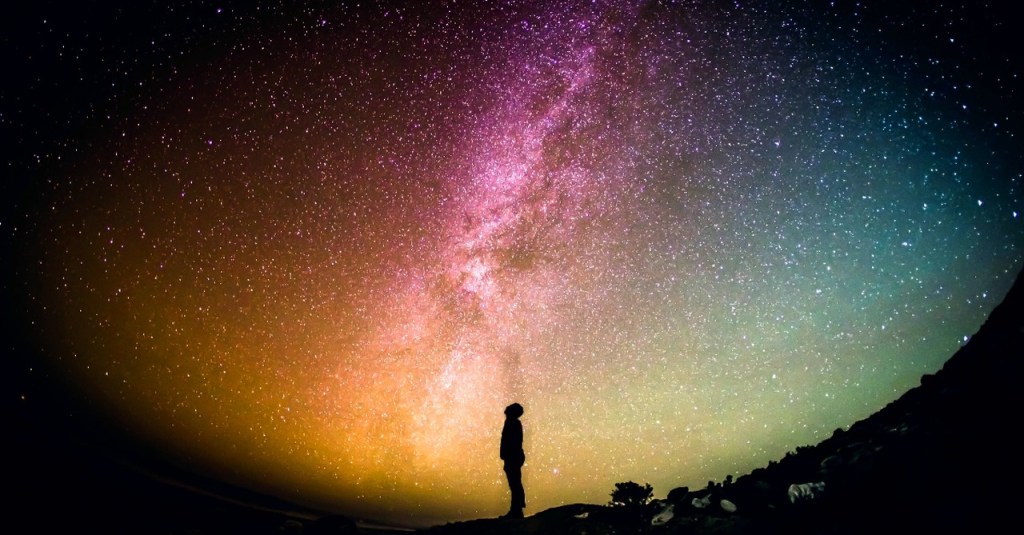
Fr Vic Badillo SJ, of happy memory, was our resident astronomer at the Manila Observatory. An asteroid is named after him. We used to say that of all the Jesuits working at the Observatory, Fr Vic had the best job of all. He spent his evenings looking up at heavenly bodies.
Looking up at the sky was what people were doing when Jesus ascended to heaven. This prompted two angels who were on the ground with them to ask, why do you stand there looking at the sky?
If we were there, we too would be standing because that is what we do when someone leaves us. We do not just turn around, do an about-face, and go about as if things will go back to normal. For us Filipinos, goodbyes are difficult. And so we linger. We look and we keep looking until the one we love recedes from our sight.
But the Ascension is not goodbye nor is it about our Lord fading away and leaving us to fend for ourselves. After Christ’s Resurrection and as we head toward Pentecost, we know better than to look upward for God. God is someone who is as close to us as the very air we breathe every moment of our lives. The glorious mystery of the Ascension is not for us to look for God in the sky.
The Ascension is for us to turn our gaze heavenward to receive three gifts: wonder, humility, and destiny.
First, wonder. Perhaps it’s been a while since the moon or stars held our gaze. They’ve become so commonplace we take them for granted. Never mind that when we look at stars we are looking at the past or that starlight we are seeing just now left those stars millions or billions of years ago. Our very own sun is just one of 200 billion stars in our home galaxy. And our own galaxy is just one of more than 100 billion out there. The numbers are staggering and so it is regrettable (as once I remarked) that we see starlight and we are no longer startled.
When I show pictures of our Milky Way galaxy to my students, I ask if they know who took or drew those pictures. How can we have a selfie of our own galaxy when we are very much inside it? To top it all, how is it that we who are the tiniest inhabitants of this universe can even manage to imagine, let alone draw the universe? The ultimate wonder you see is not in starlight or the staggering numbers out there. What truly astonishes is the transcendent reach of our own mind and consciousness.
When we are too busy to even turn our gaze heavenward, we lose our sense of wonder.
Second, humility. You’d think that the extraordinary power of the human mind to grasp the universe or exercise dominion over the earth would make us feel special and proud. It shouldn’t really. For all our mind and wealth and power, we are not in complete control of our lives. We stumble for answers to our questions. If we look up long enough, it just might dawn on us that we are passengers, we have always been passengers, not drivers in this brief pilgrimage of life.
We look to the heavens to recover perspective and get a sense of our size. Our littleness keeps us from being proud and feeling entitled. Sa totoo lang, what do we deserve? What should be ours by right? We may have evolved from stardust but dust is who we are and to dust we shall return. This truth need not underwhelm or sadden us if it brings us to humility. The utter contingency and gratuity of everything is humbling. We are humbled by gifts we know we do not deserve.
When we look down, not up, we lose our humility.
Third and last, destiny. We look to the heavens to rediscover where we are going ultimately. When my father taught me to ride a bicycle, his first lesson to me was simple: don’t look down; look ahead; look far. If you keep looking down on the ground, afraid to fall, you will fall. The Ascension guides us to look up and look ahead so to regain our balance and discover again the point of this pilgrimage. Our destiny is not earth. Our destiny is not death.
In the Preface of the Mass for today, we hold that our Lord “ascended, not to distance himself from our lowly state but that we, his members, might be confident of following where he, our Head and Founder, has gone before.” The Ascension is not a suspension or reversal of the Incarnation. It is not a departure, much less about Christ our Lord working from a distance, taking leave of our messy world. The Ascension is a remembrance of our future (to paraphrase Gabriel Marcel in his Phenomenology of Hope), an assurance that we are meant to rise and live with God forever.
When we forget to look up every so often, we miss our destiny.
On this solemnity of the Ascension, we look up not because Christ is some heavenly body outside the orbit of our lives. We train our sights heavenward to receive the three gifts of wonder, humility, and destiny. We look up because we know better than to look down and be afraid.
*image from crosswalk.com
 One Lost Sheep
Thank you Ninang Deb. Very inspiring. Mercy
Sent from Yahoo Mail for iPad
LikeLike