Isaiah 52:13—53:12; Psalm 31; Hebrews 4:14-16; 5:7-9; John 18:1—19:42, Good Friday
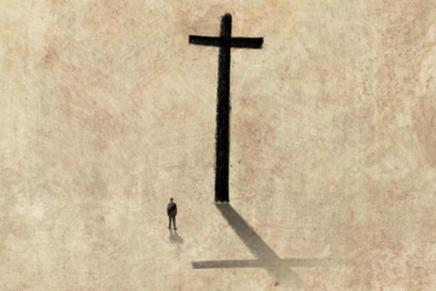
1. Opening: The Cry That Pierced Filipino Memory
We lost an icon yesterday, the one and only superstar of Philippine television, movies, theater and music—Nora Aunor. No other artist, living or dead could equal her depth of emotion when playing iconic roles. And when we think of her, many images come to mind. But perhaps none as raw, visceral and as unforgettable, as that scene of betrayal in a movie that sealed her status as the Queen of drama. In that movie, Ina Ka ng Anak Mo, she played Esther, a loving and dutiful but infertile wife who had to leave her husband to seek a better future for the two of them. The husband had an affair and had a child with her own mother who was a very religious woman. When Esther found out about the betrayal all hell broke loose.
She screamed—not once, not twice, but three times—“Hayup! Hayup! Hayup!” Each word in response to her mother pleading for forgiveness whose betrayal cut deeper than any blade.
That scream is not performance—it’s primal. It echoed our very own hurt at the hands of our loved ones.
It’s our very scream, the scream of anyone who’s ever been hurt, betrayed, abandoned.
It’s a scream that comes from the darkest part of the soul.
But today, Good Friday, after the Seven Last Words, we listen to another series of screams. Not from the screen, but from Scripture. From a man broken—not by imaginary hurts—but by the weight of the world’s sin.
2. The Seven Cries of Christ
Let’s walk with Jesus through His Passion—not just by the events, but by His cries:
a. The Cry of Loneliness
“Could you not watch with me even one hour?” (Mt 26:40)
In Gethsemane, Jesus begs his friends to stay awake—just to be with Him.
But they sleep.
Even before the cross, abandonment already begins.
b. The Cry of Hurt
“Judas, would you betray me with a kiss?” (Lk 22:48)
A friend’s betrayal hurts more than an enemy’s blow.
That kiss in the dark—like a dagger dressed as affection.
c. The Cry of Injustice
“If I have spoken wrongly, testify to the wrong. But if I have spoken rightly, why do you strike me?” (Jn 18:23)
Jesus stands accused, mocked, spat on—for crimes He never committed.
Every false accusation—He absorbs.
d. The Cry of Indignation
“My kingdom is not of this world…”
“You would have no power over me if it were not given from above…” (Jn 18–19)
Before Pilate, Jesus speaks with fire—not to defend Himself, but to expose the rot of power and the truth of the Kingdom.
e. The Cry of Despair
“My God, my God, why have you forsaken me?” (Mk 15:34)
This is not weakness. This is honesty.
This is Jesus feeling what we feel when even God seems silent.
It is His dark night of the soul.
f. The Cry of Compassion
“Father, forgive them…”
“Today, you will be with me in Paradise.”
“Woman, behold your son…”
Even in agony, Jesus thinks not of Himself—but of the thief, the soldiers, His mother.
g. The Cry of Surrender
“It is finished.”
“Father, into your hands I commend my spirit.” (Lk 23:46)
This is not a cry of defeat.
It is the ultimate cry of trust.
Not revenge. Not rage. Not “Hayup!”
But “Thy will be done.”
3. The Full Circle: Jesus and Peter, From Shadows to Sunrise
And after all this—after Peter denied Him not once, not twice, but three times in the dark—
Jesus meets him again at dawn, by the Sea of Tiberias.
Three times He asks, “Simon, son of John, do you love me?”
Three times Peter responds—first hesitant, then broken, then certain—“Yes, Lord, you know I love you.” And three times Jesus restores him: “Feed my lambs… Tend my sheep… Feed my sheep.” (Jn 21)
This is the full circle:
- From denial in the shadows
- To redemption in the light
- From cowardice
- To commission
Jesus did not stop at forgiving Peter. He gave him back his dignity, his mission, his apostleship.
4. The Radical Difference
Nora Aunor’s scream was justified. It spoke for many of us. We are Esther in many ways.
But what Jesus shows us is not a silencing of that scream—but a transformation of it.
Where the human cry demands revenge,
Jesus’ cry offers forgiveness.
Where the world screams “Hayup!” to condemn,
Jesus whispers “I forgive you” to redeem.
5. Invitation to the Crowd at Calvary (Us)
So where are we in this Passion?
- Are we Judas, betraying in the dark?
- Are we Peter, denying out of fear?
- Are we the crowd, shouting one day “Hosanna!” and the next, “Crucify him!”?
Or maybe we’re the one screaming—“Hayup!”—because we’ve been wronged.
And all of that—Christ takes to the Cross.
He does not answer with rage.
He does not strike back.
He answers with cries that break the cycle of revenge.
6. Conclusion: From Darkness to Light
Judas betrayed at night.
Peter denied in the shadows.
But at dawn, Jesus rose and forgave.
Good Friday does not end in screams.
It moves through them—into resurrection, reconciliation, redemption.
So bring your scream today. Your betrayal. Your pain.
Lay it at the foot of the Cross.
And let Jesus transform your “Hayup!”
into “Father, forgive.”
(In Loving Remembrance of Nora Aunor)
*Image from Premier Christianity Magazine
 One Lost Sheep