Exodus 12:1–8, 11–14; Psalm 116:12–13, 15–18; 1 Corinthians 11:23–26; John 13:1–15, Holy Thursday of Our Lord’s Passion
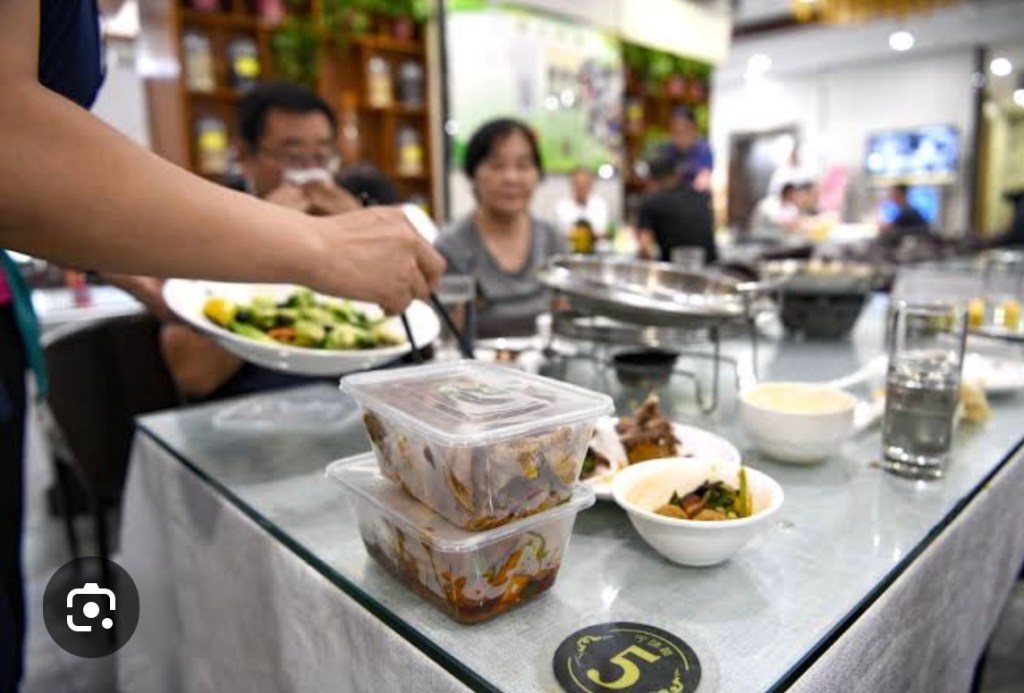
1. Introduction: Everyone’s Guilty of a Little ‘Sharon’
Let’s admit it—almost all of us have done a Sharon at least once.
After a party, a wedding, or a town fiesta, someone inevitably brings out the Tupperware or plastic bags and starts packing leftovers. We smile, we help, and we say, “This is for the the kids…Ate Pacita…or the neighbor who couldn’t come.”
This Filipino practice—nicknamed pagshasharon after Sharon Cuneta’s role in Bituing Walang Ningning where the iconic song’s lyric came to symbolize the act (Balutin mo ko si lilim ng iyong pagmamahal…)—was once seen as sweet and thoughtful. But thanks to memes and mockery online, it’s now often viewed as insensitive, greedy and shameful.
What used to be a symbol of sharing and thoughtfulness has been reduced to punchlines and ridicule. Anyone doing it is called out an uncaring “Sharon” and the dastardly act “pagshasharon.” But today, on this sacred day of remembrance and thanksgiving, let’s explore how to recover its hidden goodness.
Could it be that pagshasharon, when done right, holds a deep spiritual meaning—one that connects us to the Passover, the Last Supper, and even to the Eucharist itself?
2. Hidden Virtues in a Vilified Habit
Reframed with intention and generosity, pagshasharon shows us important truths:
• It extends the joy of the feast to those who were not able to attend—the sick, the poor, the working, or the homebound.
• It refuses wanton waste. It affirms that no good thing, especially food or blessing, should be thrown away.
• It reveals the host’s magnanimity. To allow people to take something home is to say: This abundance is not just for show; it’s for sharing. It’s for everyone.
Done out of love, pagshasharon is not gluttony. It is a sacrament of generosity, a sign of hearts that remember the ones beyond the table.
3. First Reading (Exodus 12): The First ‘Sharon’ Commanded by God
God’s instructions to the Israelites during the first Passover are deeply symbolic:
“This is how you are to eat it: with your loins girded, sandals on your feet, and your staff in hand.”
“And if a household is too small for a whole lamb, it shall join its nearest neighbor in obtaining one.” (Exodus 12:4)
Here it is: the first “Sharon moment,” commanded by God Himself. A family that cannot consume a whole lamb must share it with another.
Why? Because the lamb must not be wasted. And because no one should be left out of this saving meal.
This is not just good logistics. It’s good theology.
The lamb is not a private possession. It is a communal gift—God’s provision meant to feed both your household and your neighbor’s.
4. Psalm and Second Reading: A Meal that Becomes a Mission
The Psalm reminds us:
“Our blessing-cup is a communion with the blood of Christ.”
And Paul echoes in his letter to the Corinthians:
“As often as you eat this bread and drink this cup, you proclaim the Lord’s death until he comes.”
In other words, this meal is not just about memory—it’s about mission.
The Eucharist is not a spiritual snack. It is food for transformation. We consume Christ not just to feel close to Him, but to be made like Him—so we can go out and feed others with the love, compassion, and mercy we ourselves have received.
5. Gospel: Jesus as Host, Food, and Take-Home Grace
At the Last Supper, Jesus takes off His outer garment, girds Himself with a towel, and begins to wash His disciples’ feet.
He doesn’t just give bread—He gives Himself.
He becomes:
• The Unblemished Lamb, sacrificed for all.
• The Bread without yeast, free from pride or ego.
• The Bitter Herbs, bearing the sorrow and pain of slavery and sin.
He is both the one who offers and the offering itself. The Ultimate Priest and the Ultimate Sacrifice.
And when He says, “Do this in remembrance of me,” He is not only talking about repeating the ritual. He is commanding us to take Him home, into our hearts, into our broken families, into our unjust societies.
He is the sacred “take-home”—not for hoarding, but for healing the whole world.
6. The Gospel in a ‘Sharon Pack’
What if we saw every Eucharist as a call to pagshasharon?
• To bring Christ’s body not just into our mouths, but into our lives.
• To take His sacrifice and share it with those who were not invited to the feast—the “canceled,” the forgotten, the displaced.
• To refuse to waste God’s grace by keeping it only for ourselves or our inner circles.
• To imitate Jesus’ magnanimity, offering ourselves even to those who might not understand or even deserve it.
That’s the true power of pagshasharon:
It is grace that moves.
It is love that travels.
It is the Eucharist that refuses to stay behind in the Church, and instead walks out the door with us. It is salvation that actively seeks out the ones needing it. Hence, it cannot remain contained. It must be shared.
7. Conclusion: A Reclaimed Practice
Let’s stop mocking pagshasharon. Let’s recover its grace.
The world needs more people who think of others not present at the table.
More people who hate to see anything—especially love—go to waste.
More people who, like Jesus, give without counting the cost.
On this night, when Christ gave us His body and blood to take and eat, to take and drink—
Let us be the take-home.
Let us be the ones others unwrap and find mercy in.
Let us feed those who hunger for justice, for affection, for belonging.
That is, I believe, the holiest Sharon of all.
Amen.
 One Lost Sheep