Luke 22:13-23:56, Palm Sunday
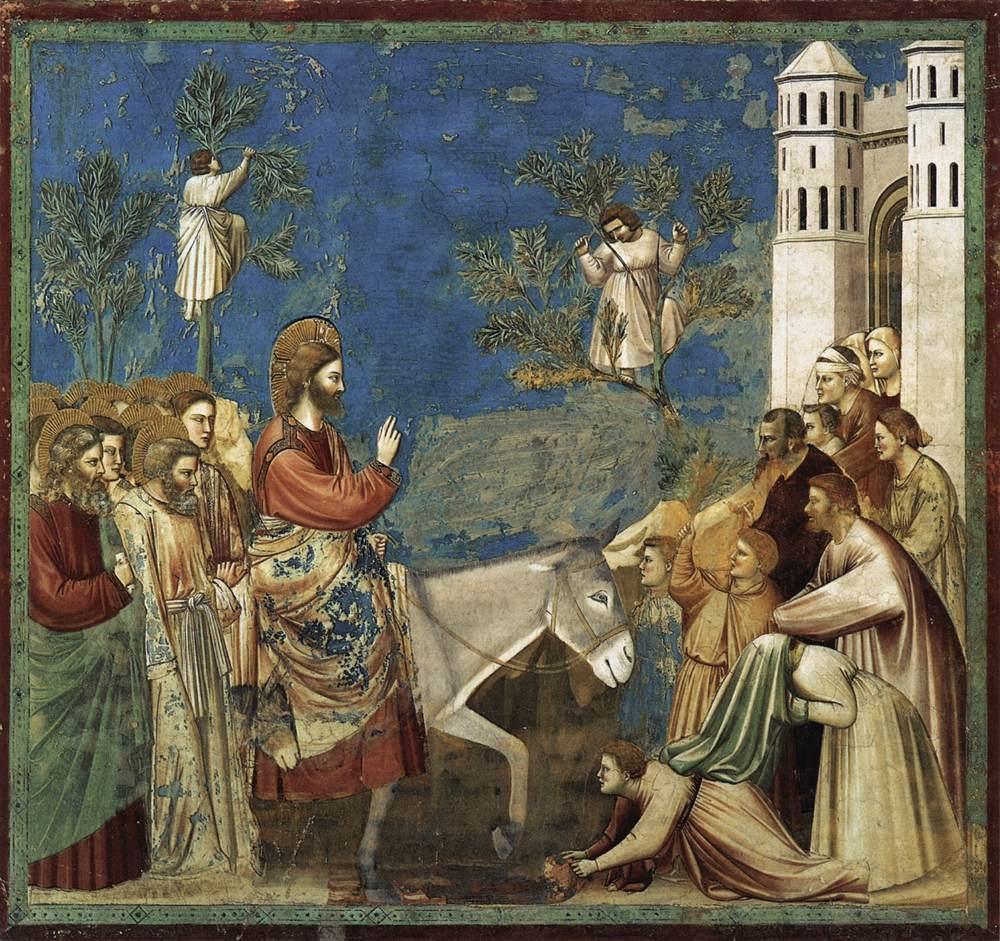
We began today’s Mass with palms raised high, welcoming Christ into Jerusalem with hosannas. But we know what lies ahead in the story. By the end of this liturgy, we will walk with Him toward the Cross. The shouts of “Hosanna!” will turn into “Crucify Him!”
And that shift—so sudden, so jarring—is not so foreign to us. In our time, we see this turn every day, especially in what has become an epidemic of rage, both on the streets and in our hearts.
We’ve heard of the deadly road rage incidents in our cities of late—where a missed turn or a honked horn escalates into violence and even death. But rage doesn’t always explode in obvious ways. Sometimes it seeps out in more subtle forms:
- An angry stare at the cashier who’s too slow.
- An irritated sigh at someone who cuts in line.
- A sarcastic tone with a spouse or child.
- The cold silence we give to a co-worker who we think slighted us.
These are micro-rages—small acts of hostility that slowly poison our souls.
I. The Road We’re On: Rage as a Default Mode
Rage is our society’s reflex. Not just physical violence, but also contempt, blame, shaming, cancellation. There is a terrifying ease with which we move from annoyance to dehumanization.
We don’t want to see ourselves as angry people. And yet, how often do we choose to be right instead of being kind?
How often do we turn petty frustration into silent punishment?
Palm Sunday invites us to reflect not just on Christ’s suffering, but on our own role in perpetuating the culture of rejection. The same people who welcomed Jesus in joy later demanded His execution—not because He failed them, but because He didn’t meet their expectations.
We still crucify what we don’t control.
II. A Human Example: Fr. Paul Murphy
Let me tell you about a man who chose otherwise.
Fr. Paul Murphy, an army chaplain in Ireland, was stabbed seven times by a 16-year-old boy radicalized by hate. He almost died. But at the court hearing, Fr. Murphy stunned everyone by saying:
“As a man of faith, I am in the business of forgiveness, and I offer to you… the forgiveness that will hopefully help you become a better person. I hope you use the life you’ve been given to bring goodness into the world.”
He even hugged the young man in court.
And later, while still recovering in the hospital, Fr. Murphy offered an even more haunting reflection:
“Better me than someone else. Maybe I was meant to take this. Maybe it was God’s plan that I took the violence so someone else wouldn’t have to.”
This wasn’t bravado. These were the words of a man after the pain, choosing to see his suffering not as meaningless, but as redemptive—a shield that protected others.
And in that reflection, we hear an echo—an unmistakable resonance with the voice of Christ.
III. Christ’s Compassion: A Different Road
Because Jesus didn’t just say, “Better me than someone else” after the pain.
He said it before the excruciating agony of torture and the crucifixion.
He knew what was coming: betrayal, mockery, scourging, the agony of Gethsemane, the nails, the suffocation, the abandonment, and death. And still, He walked into Jerusalem—freely, not as a victim caught by surprise, but as a Savior who chose to absorb the world’s sin and rage rather than let humanity remain enslaved to it.
“No one takes my life from me,” He says in John’s Gospel, “but I lay it down of my own accord.”
Jesus doesn’t just react with forgiveness—He prepares Himself to forgive, even while the wounds are still being inflicted.
Christ saw the storm ahead. And instead of escaping it, He stepped into its center—not just to show us a better way, but to become the Way.
Today’s Gospel—the Passion of our Lord—is the most violent story ever told. It is a narrative soaked in betrayal, mockery, injustice, physical torture, and public humiliation.
And yet, Christ never lifts a finger in retaliation. Instead:
- He heals the ear of the man who comes to arrest Him.
- He calls Judas, “Friend,” even in betrayal.
- He remains silent before Pilate’s insults.
- He forgives His executioners: “Father, forgive them; they do not know what they are doing.”
The road of Christ is not paved with entitlement or rage. It is lined with radical forgiveness.
Isaiah, in our first reading, says:
“I gave my back to those who beat me… I did not shield my face from buffets and spitting… The Lord God is my help, therefore I am not disgraced.”
And in Philippians:
“Christ Jesus… humbled himself, becoming obedient to death—even death on a cross.”
Christ flips the script. He doesn’t absorb violence and return it—He transforms it. What should have been the ultimate humiliation becomes the ultimate act of love.
IV. The Invitation: Transforming Our Daily Rage
Palm Sunday is not about passively admiring Christ’s sacrifice. It is about learning how to walk that same path.
Ask yourself:
- Where do I experience micro-rage in my life—on the road, at work, at home, online?
- Who are the people I mentally crucify for being inconvenient, irritating, or slow?
- What would it mean to respond to them not with contempt but with compassion?
- Can I forgive not only the great betrayals, but the small slights?
- Am I willing to lose the argument, to keep the relationship?
- Can I say, like Christ and Fr. Murphy: “Let it be me, not someone else,”—even when it hurts?
These questions may sound soft in a world that prizes toughness. But the Cross is not soft. Compassion is not weakness. It is the strongest road Christ could have chosen—and the one we are now called to walk.
Conclusion: Flip the Script
As we hold our palms today, let us remember: the same hands that waved branches in celebration were the hands that clenched into fists of condemnation.
But we can choose a different ending. We can flip the story.
From road rage to the road of mercy.
From micro-anger to macro-love.
From being part of the mob, to being a mirror of Christ.
Walk the road. Flip the script. Choose compassion.
Amen.
*Image : Fresco by Giotto
 One Lost Sheep
Thanks Ninang Deb for this homily which ynderscores my lack of love. Mercy
Sent from Yahoo Mail for iPhone
LikeLike