Joshua 5:9a, 10-12; 2 Corinthians 5:17-21; Luke 15:1-3, 11-32
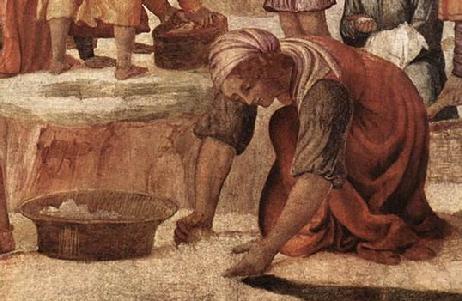
In today’s first reading, there’s a detail that’s easy to overlook: “The manna ceased.” For 40 years, God fed the Israelites in the wilderness with manna—daily bread from heaven. It was how they survived. But once they enter the Promised Land and eat the produce of the land, the manna stops. It’s not that God stops providing. It’s that His provision changes. What sustained them in one season isn’t what will nourish them in the next.
We all have our versions of manna. Sometimes it’s a routine that once gave structure but now feels empty. A role or identity we built our lives around—the achiever, the strong one, the one in control, the one who never makes a mistake—that no longer fits. It might be an old wound we’ve carried so long it feels familiar. Or an attachment to something good that we’ve come to rely on too much. Even the way we pray or relate to God may dry up, no longer feeding us as it once did. When those things stop sustaining us, we may panic. We may cling harder. We get stuck. But often, God is inviting us to trust that a new way of being nourished is already beginning.
That same movement—from clinging to the old to receiving something new—unfolds in today’s Gospel. The younger son goes off chasing freedom, but ends up starving. He returns home, stuck on his guilt, hoping only to be taken back as a servant. But the father doesn’t dwell on his past nor define him by his failure. He welcomes him with open arms and offers a new beginning. The older son, though he never left, is just as stuck. He’s been dutiful, but he’s bitter—clinging to fairness, to performance, unable to accept the father’s generosity. Both sons are trapped in old ways of thinking that no longer give life. And both are being invited into something new: a deeper way of belonging, of trusting, of being loved.
That invitation is ours too. Like the sons, we sometimes find ourselves clinging to patterns or roles that once made sense but now leave us dry. We resist change, afraid to lose what’s familiar. But what if, like with the manna, God isn’t withholding something—He’s preparing us for something better?
This is the heart of Lent: a season of renewal, of learning to trust God in new ways. It invites us to release what once sustained us but no longer does—not as rejection, but as preparation. Maybe this Lent, God is gentlyl etting the manna stop—not to punish us, but to move us. To free us. To feed us more deeply. To transform us.
As St. Paul writes, “Whoever is in Christ is a new creation.” Not slightly adjusted. New. A new heart. A new way of seeing. A new way of being in the world. And that kind of transformation often begins where something familiar falls away.
So we ask: What is the “manna” I keep gathering—out of habit, fear, or nostalgia—that no longer feeds me? And what is God offering now, that I may be too afraid or too proud to receive?
The manna may have stopped. But God has not. He is still sustaining us—just in a new, unexpected way.
The manna may have stopped. But the feast—the real feast—is just beginning.
*Image from painting by Bernardino Luini
 One Lost Sheep