Luke 1:39-45; Fourth Sunday of Advent
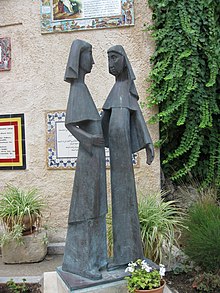
About these two women in our Gospel today, you will notice how one was barely on the threshold of womanhood, the other, easily past menopause. The Visitation however was more than just a meeting of miraculously pregnant ladies. The second joyful mystery is about two women being pulled together by the tide of that first Christmas, in a joyful encounter that moves them to tell each other of this nudging, tugging, wondrous possibility of God’s life stirring in their bodies.
The joyful mystery of the Visitation invites us to some possible visits we can make this Christmas. To visit is to go and see and spend time with someone. The word comes from the Latin root “videre” which means “to see”.
If I may suggest then three visits we can make in this joyful season. The first we will do anyway out of social obligation: we will go see and spend time with one another. The second is to take time to go and visit our own selves. And third, we can go to see and spend time with God.
The first visit is to go and see and make time for one another. Time is the one thing that has become more expensive in our lives. We can take time out from scrolling our little screens, forego our being hooked and entertained by them for a moment and turn our attention and presence to each other. It is love actually, subtly, truly when we sacrifice our time and presence in every visitation.
When we visit each other to share gifts this Christmas, let us learn to appreciate again what is hard to count: the value of time and presence we give to each other. If we clear enough room in our lives to listen to our stories and relish our meals together, we can create moments to bless each other and be grateful for the gift of just this time to be with one another.
Second, let us go and spend time and see to our own selves. This is never a selfish thing if this selfward visit helps us to be truthful about ourselves. The time we devote to be with ourselves is the beginning of prayer. When we make time to pray in the presence of God who knows us more than we can ever know us, we can take out the masks we tend to wear when we are with others or just by ourselves.
This act of visiting our own selves need not trap us in self-absorption if we attend to what leaps inside and moves us, if we are present to what nudges us to be more loving and forgiving. When we visit ourselves we cannot be always on the move; we need to come to rest. Without this stillness of self, we might miss the motion of God in our lives; we might fail to sense God stirring to life inside us.
Third and last, this Christmas, we can go and spend time to visit God. No, this is not a call for a round of visita iglesia. The two women in our Gospel today are a wonderful reminder that God is not always outside ourselves, not up there or out there in some holy place. God is inside us, in our own bodies that are as temples of the Holy Spirit (in the words of St Paul, 1 Cor 6:19). Bearing God in human vessels such as ours, we only need to go inside ourselves to visit God.
This is hard to believe only because we cannot imagine ourselves to be a holy place. We cannot grasp how God can choose to stay in a place as broken or guarded as ourselves. We know ourselves and we know that our hearts can be hard as stone. But God’s life in us is like a stream that never runs out; God’s presence is like patient water that can cut stone and shape it according to his love.
The visitation of Mary and Elizabeth is more than just a tale of two miraculously pregnant women. Their joyful encounter encourages us to make time for the visitations that matter and keep us together. Their meeting each other urges us to recognize God moving inside us and leaping for joy within us.
God can move mountains and waves but what God does at Christmas, what God longs to do every Christmas is move us by his love.
*photo of statue at the Church of the Visitation in Ein Karem
 One Lost Sheep