John 6: 60-69, 21st Sunday in Ordinary Time
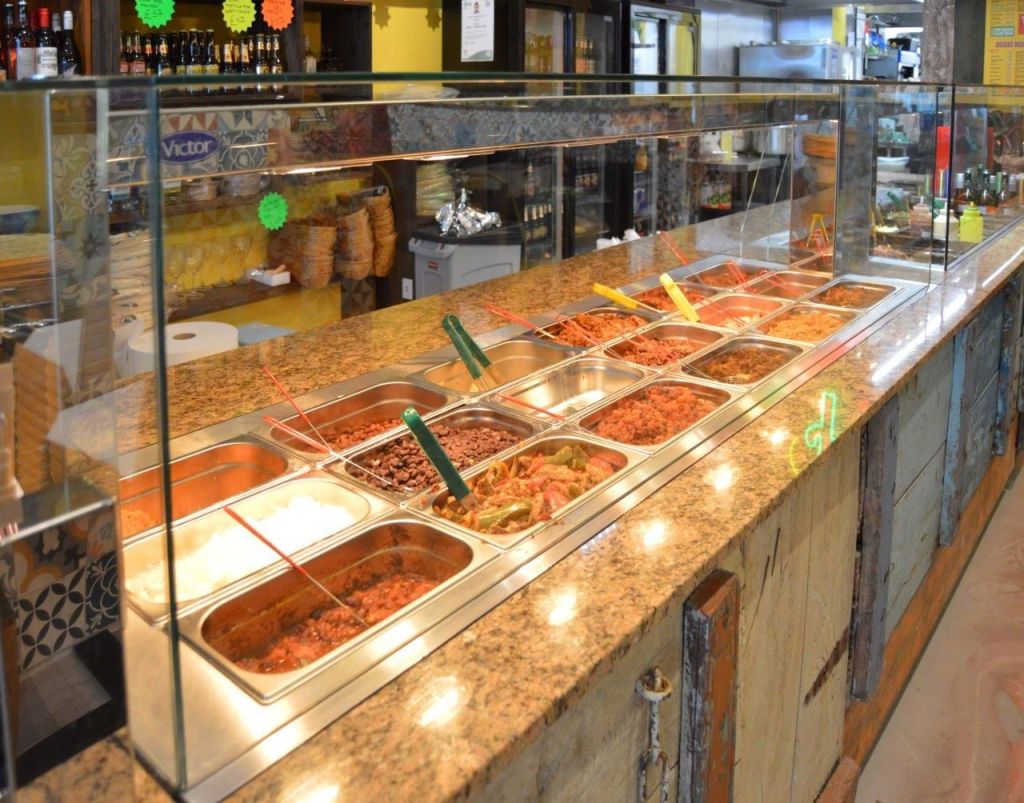
Have you ever come across the term “cafeteria Catholic?” Patterned after the analogy of being in a cafeteria, where you get to pick and choose the food that you want to eat, cafeteria Catholics are those who simply pick and choose the Church teachings they want to believe in, often, out of convenience. In this way, they get to avoid the difficult teachings that challenge the way they live their lives. They are criticised for being committed only insofar as they are not inconvenienced.
My dear brothers and sisters, our readings today revolve around the theme of commitment, and the key insight we are invited to reflect upon is that commitment demands the fullness of our decision. We cannot be committed only partially. Commitment demands the totality of our yes.
But how is commitment manifested? I would like to believe that even as we speak of totality, it actually gradually unfolds in three stages. Commitment is manifested when we make a decision, when we live out our decision, and when we remain faithful to our decision. Let us reflect upon these three stages using today’s readings.
First, commitment is manifested when we make a decision.
In the first reading, we hear of Joshua gathering all the tribes of Israel to ask them: “Who do you want to serve, the Lord God or the gods of the Amorites?” In asking this question, Joshua is asking Israel to make a decision; Joshua is asking Israel to make a commitment.
My dear brothers and sisters, a person who cannot decide is a person who cannot commit. Sadly, there are many people who are like this. They just go with the flow, unable to decide for themselves what they truly believe in.
Think about it. How about you? Have you made a decision as to how you want to live your life? It is good to ask, “Who do I really want to serve?” In our modern world, there are so many gods competing for our attention: power, money, fame, pleasure. Ask yourself, “Who do I really want to serve, God, or these many other gods?” My dear friends, your answer to this question will give direction to your life. Thus, the sooner you confront this question, the better.
After having made a decision, the second stage in the manifestation of commitment is the living out of our decision.
In the second reading, St. Paul, in his letter to the Ephesians, speaks of the demands of marital commitment. He points out that marital commitment ought to be lived out in the concrete. Indeed, my dear friends, commitment is seen not so much in the words that we speak, but in our concrete actions, in the way we live out our decision.
I guess this is what married life teaches us. Marriage is not simply about the “I do’s” exchanged on the wedding day. Those of you who have been married for some time would know that the essence of marriage is really found in the daily living out of those “I do’s” – in caring for each other, in supporting each other, in being patient with each other. It is in the daily grind of life that you get to see the true meaning of marital commitment. It is in the daily living out of what you have committed to that you get to see what marriage really is.
Finally, the third stage: commitment is manifested when we remain faithful to our decision.
These past few Sundays, we’ve been reading about the Bread of Life discourse, where Jesus refers to Himself as the living bread that came down from heaven. In today’s Gospel, we come to the end of this discourse, and we are told that some of Jesus’ disciples had a difficult time accepting his teaching. Many of them said, “This saying is hard.” It is for this reason that, as the Gospel today tells us, “many of his disciples returned to their former way of life and no longer accompanied him.” In them, we see a clear example of a commitment that is half-hearted. On the contrary, when Jesus asked the twelve apostles, “Do you also want to leave?” Simon Peter answered for them and said, “Master, to whom shall we go? You have the words of eternal life.” In the twelve apostles, we learn that the true measure of commitment is fidelity.
In our life, we sometimes make decisions that are half-hearted. Because of this, these decision are not sustained. We hold on to them, but only temporarily. This is not the type of commitment that the Lord asks of us. The Lord demands our full commitment, and He wants us to be faithful to our commitment. I invite you to ask yourself: How committed are you to Jesus? Are you truly faithful to Him? Or do you only hold on to Him when it is convenient to do so? Let us pray that like the twelve apostles, we may realize that it is only in Jesus that we will have eternal life.
My dear friends, in our world today, where the value of making a commitment seems to be greatly challenged, let us pray that we may be inspired to continue seeing its value. May we manifest our commitment by making a decision, living out that decision, and remaining faithful to that decision. May our life be a life of commitment, a life of commitment, especially, to our Lord, who is the source of all life, to our Lord who promises us eternal life. Amen.
*Image from the Internet
 One Lost Sheep