John 6:41-51; 19th Sunday in Ordinary Time
In the first reading, we see a despondent Elijah. His mission to King Ahab and his equally weird wife, Jezebel, backfired. There was a killing spree afoot against prophets. So, Elijah ran for his life as his life ran out of fuel. Feeling like a failure, he just wanted to sleep forever. But then, he woke up to a hearth cake and a jug of water. If I know God, that bread must’ve been still warm; that water, still cool. “Kumain ka,” the messenger said. “Gutom lang ‘yan.” After eating, Elijah slept again, and again woke up to…breakfast in bed! He ate. Strengthened now, he walked 40 days and 40 nights to Mount Horeb.
Sisters and brothers, the Israelites will always believe that Yahweh takes hunger seriously. Their prayers, wisdom sayings, stories, songs tirelessly recount how Yahweh sent manna from heaven, as their ancestors wandered in the desert for 40 years before reaching the Promised Land. And how did they describe the Promised Land? By food reference! “A land flowing with milk and honey.” In those areas, famine was always just around the corner. So, it’s not surprising that their lasting image of God is that of someone who took their hunger seriously. No faithful child of God should ever go hungry.
Fast forward to a thousand years. God’s son was no different: serious about hunger as his Father had always been. In fact, John’s community called him the “bread of life,” straightaway a memory of how Jesus referred to himself on the last night of his life. “Take and eat this bread, this is my body.” He wasn’t just being poetic at the Last Supper. That was always his magnificent obsession. Taking people’s hunger seriously leavened his life. Yes, Jesus referred to the hunger in people’s souls, and he tried filling that, too, sure. But spiritual nourishment wasn’t the only thing he was after. Otherwise, he’d have probably said, “I am the breath of life,” then sent home the 5,000 hungry listeners. But on many occasions, Jesus said, “I was hungry, and you gave me food. I was thirsty and you gave me drink. If you did this to the least of your brothers and sisters, you did it to me.” “Whoever has two tunics should share with one who has none; whoever has food is to do likewise.” “I am the door. Whoever enters by me will be saved and will find pasture.” “Feed my sheep, feed my lambs,” etc, etc. All these sayings climax in John with Jesus saying: “I am the bread of life.” So, for Jesus to identify himself as bread, this reveals a critical basis, or index, in his saving mission: hunger. In his saving mission, the Son of God took hunger seriously, especially the huger of the poor. No sister or brother of his should ever go hungry.
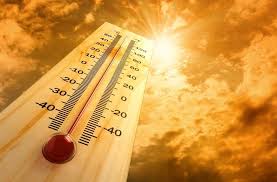
Last month, while the storm raged, a friend in Boston vibered me to ask how we were doing in the typhoon. He finally said, “Grabe ‘no? Hottest day in the planet, tapos ‘jan bumabagyo!” Napasagot tuloy ako, “Nge! Hottest day? Anong index? At sino ang basis? ‘Yung mga nasa West, kasi may heat wave ‘jan ngayon?” E’ nung nagkakamatayan sa init dito sa Southeast Asia noong April/May, may nagdeklara ba ng hottest-hottest? Pero nung sila na sa kanluran ang naperwisyo, ‘yun! I know and I’m sure there was a scientific explanation for that statement. But what were we supposed to think or do with that information? Sino ang basis at index for both the statement and its timing? The west? ‘Yung mga busog? (Na-trigger ang pari!)
As people slowly and exhaustingly rebooted their lives when the flood receded, there was still a smattering of really ill-timed interviews in the local news. “Our economy is doing excellently,” the guests said. “The Philippines is very competitive in the world market, a financial boost of energy since December. The future is bright.” I’m sure there’s mathematical/statistical backup for that. Still, I went again, “Nge! Sinong basis?” Businesses? Magnates? E’ ‘yung mga naglilimas pa rin ng mga bahay nila, pero wala man lang mabiling murang bigas? Do the hungry figure in that index, that “boost of fiscal energy”?
In my sidewalk, t-shirt-and-jeans opinion, sisters and brothers, the most critical basis and/or index of good Christian governance is when the people who earn the least have equal and easy access to food. Sufficient and nutritious food. Sapat at masustansya. Hindi pwedeng sapat lang, dapat masustansya rin. Hindi rin pwedeng masustansya lang tapos kulang naman. Sapat: meaning, kahit ikaw ang may pinakamliit na sahod sa lipunan, ‘pag dinatnan ka ng gutom ng kahit anong oras, may makakain ka. But it has to be nutritious, too. Meaning: hindi lang instant noodles, kwekwek, o fishball ang ulam.
But as long as we have brothers and sisters who content themselves with mantika and toyo over rice, or who are nagdidildil pa rin ng asin, or for the love of God, still dig for leftover food in our trash—then, we’d have to be either blind or lying when we proclaim we’re doing well as an economy. But in my 58 years on earth, I really have yet to see Christian politicians and Christian magnates work vigorously and sustainably towards eradicating hunger while counting no cost, making no profit, or swiping no kickback from the budget. Or should I just wish for pigs to fly? Because I bet you can name at least five people you personally know who were poor 20 years ago, and to this day, still are, and will probably die poor. The poor are hungry not due to calamities or lack of resources. They’re hungry because people with already so much power and so much money, who can legislate and allocate so that no child of God goes hungry—don’t. Whatever their index is, the poor seem to be, well, simply, leftovers: use ‘em or toss ‘em. Tirá.
It really shouldn’t come as a surprise to us, Christitians, if one basis, if an index of our eternal salvation is gutom. When face to face with God, we’d probably have to deal with the question, “Anak, did you get the manna message? Did you fully understand the implications of my Son saying he is bread from heaven, bread of life? When you saw him hungry, did you give him something to eat? Anak, tumulong ka ba sa abot ng makakaya mo to take the hunger of the poor seriously? Or per your basis, index, your lifestyle, were you instrumental in keeping them hungry?
There is a right and a wrong answer to these questions, sisters and brothers. If Jesus said, “I am the bread of life,” then, the right, honest answer is critical and unmistakable. So, God bless you, sisters and brothers, who are confident with your yes, you who have fed the hungry in your own, constant, sustained ways. After all, God has kept warm our hearth cake and kept cool our jug of water…and has kept his blessings coming for 40 days and 40 nights, and much, much longer.
*image from the Internet
 One Lost Sheep